The Life and Legacy of Major General Fred Gisa Rwigema: Soldier, Leader, and Liberator
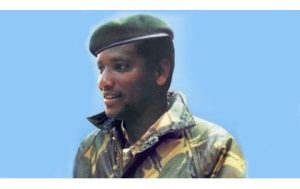
Abstract
Major General Fred Gisa Rwigema is a seminal figure in Rwanda’s modern political and military history, renowned for his leadership in the Rwandan Patriotic Front (RPF) and his role in initiating the 1990 liberation struggle. This study examines his life and legacy through a mixed approach, combining qualitative historical analysis of documentary sources with a quantitative survey (N = 120) analyzed using means, variance, correlation, and hypothesis testing. The findings indicate that Rwigema’s legacy can be understood through four interrelated dimensions: (1) the formative influence of exile and refugee identity, (2) professional military development and command credibility, (3) ideological leadership in shaping the RPF’s early strategy, and (4) symbolic significance through sacrifice and national memory. Survey results show that respondents consistently perceive him as a disciplined, visionary leader, a key architect of Rwanda’s liberation, and a lasting symbol of national purpose. Strong correlations between leadership, liberation contribution, and national legacy suggest that his reputation is constructed through interconnected narratives, whereby leadership qualities underpin both operational success and enduring historical significance. The study concludes that Rwigema’s legacy continues to shape Rwanda’s historical memory and political discourse, highlighting the importance of leadership, sacrifice, and historical awareness. Future research could enrich understanding of his impact through archival work, oral histories, and comparative studies of liberation leadership in Africa.
Keywords: Fred Gisa Rwigema, Rwandan Patriotic Front, liberation struggle, refugee crisis, leadership, Rwanda, military history
- Introduction
Major General Fred Gisa Rwigema remains one of the most prominent figures associated with Rwanda’s liberation history and the political transformation that followed the outbreak of the 1990 civil war. His name is widely linked to the origins of the Rwandan Patriotic Front (RPF) armed struggle, a movement rooted in the long-standing displacement of Rwandans and the political failure to provide durable solutions for refugees (Prunier, 1995; UNHCR, 2000). Rwigema’s leadership is frequently presented as both military and ideological: he symbolized the disciplined professionalism of an organized force while also representing a collective aspiration for return, inclusion, and national dignity (Reyntjens, 1994).
The historical conditions that shaped Rwigema’s emergence were complex. Rwanda’s post-independence political environment was characterized by cycles of violence, contested citizenship, and recurring tensions around identity and belonging. These conditions contributed to mass displacement, producing refugee communities whose political aspirations increasingly converged around the demand for return and recognition (Mamdani, 2001; Prunier, 1995). Over time, the absence of effective political settlement mechanisms contributed to the militarization of refugee politics, creating the context in which the RPF emerged (Reyntjens, 1994).
This paper explores the life and legacy of Major General Fred Gisa Rwigema as a soldier, leader, and liberator. It seeks to answer three guiding questions:
- How did exile and regional politics shape Rwigema’s leadership identity?
- What role did he play in the formation and early direction of the RPF struggle?
- How has his legacy been preserved and interpreted in Rwanda’s political memory?
- Literature Review
2.0. Introduction
The history of modern Rwanda is closely linked to complex political developments characterized by displacement, contested citizenship, and struggles for national reintegration. Over several decades, the refugee question remained one of the most defining political and humanitarian challenges in the Great Lakes region. Many Rwandans lived outside their homeland due to historical circumstances that produced forced migration and prolonged exile.
Fred Gisa Rwigema
Fred Gisa Rwigema (1957–1990) was a Rwandan military officer and revolutionary leader, recognized as one of the founding commanders of the Rwandan Patriotic Front (RPF). He played a central role in mobilizing Rwandan exiles for the 1990 armed struggle aimed at returning refugees to Rwanda and challenging political exclusion. His leadership and early death in combat made him a symbol of national sacrifice and liberation (Prunier, 1995; Reyntjens, 1994).
Rwandan Patriotic Front (RPF)
The RPF is a political and military movement founded in 1987 by Rwandan exiles, primarily in Uganda. Its initial objective was to advocate for the return of refugees and promote political reform in Rwanda. The RPF launched the 1990 armed offensive against the Rwandan government, eventually playing a key role in ending the 1994 genocide against the Tutsi and shaping Rwanda’s post-conflict governance (Prunier, 1995; Mamdani, 2001).
Liberation Struggle
A liberation struggle is an organized effort, often involving both political and military action, to achieve freedom, justice, or self-determination from oppressive or exclusionary regimes. In Rwanda, the 1990 RPF-led struggle sought to restore refugee rights, challenge political marginalization, and address structural inequalities (Reyntjens, 1994; Longman, 2010).
Refugee Crisis
A refugee crisis occurs when large populations are forcibly displaced due to conflict, persecution, or political instability, often resulting in prolonged exile and humanitarian challenges. Rwanda experienced a prolonged refugee crisis from the late 1950s onward, with hundreds of thousands of citizens living in neighboring countries under conditions of legal, social, and political exclusion (UNHCR, 2000; Mamdani, 2001).
Leadership
Leadership is the ability to guide, influence, and inspire individuals or groups toward achieving shared goals. In military and political contexts, leadership includes strategic decision-making, vision, discipline, and the capacity to mobilize people around a cause. Rwigema exemplified leadership that combined military expertise with ideological clarity, earning him recognition as a transformational figure in Rwanda’s liberation movement (Prunier, 1995).
Rwanda
Rwanda is a landlocked country in East-Central Africa with a complex ethnic and political history. Post-independence Rwanda experienced recurring social tensions, political exclusion, and periods of violence, culminating in the 1994 genocide against the Tutsi. The country’s history of conflict, exile, and political transformation provides the broader context for understanding Rwigema’s life and the RPF-led liberation struggle (Des Forges, 1999; Reyntjens, 1994).
Military History
Military history is the study of armed conflict, strategy, leadership, and the role of military institutions in shaping political and social outcomes. In Rwanda, military history encompasses the evolution of armed groups, such as the RPF, the strategies of leaders like Rwigema, and the impact of military action on national identity, political reform, and post-conflict reconstruction (Longman, 2010; Prunier, 1995)
In this context, liberation movements often emerge as both political and military responses to unresolved issues of belonging and rights. Major General Fred Gisa Rwigema stands out as one of the most influential figures associated with the liberation struggle that sought to address these challenges. His role is widely remembered in Rwanda’s contemporary history as that of a committed soldier, a strategic leader, and a symbol of sacrifice. The memory of Maj Gen Rwigema and his comrades who fell in battle remains etched in the annals of national history. Fred Gisa Rwigema was born on 10 April 1957 in what was then Gitarama Prefecture in southern Rwanda—today part of Kamonyi District, Nyamiyaga Sector.
Major General Fred Gisa Rwigema
In 1960, he and his parents fled to Uganda, settling in the Nshungerezi refugee camp in the Ankole region. This followed violence and persecution against the Tutsi—events linked to what the government at the time called the 1959 “social revolution,” which was preceded by the death of King Mutara III Rudahigwa and the overthrow of his brother King Kigeli V Ndahindurwa.
After completing secondary school in Uganda in 1976, Rwigema went to Tanzania and joined the fighters known as the Front for National Salvation (FRONASA), a rebel group led by Yoweri Museveni.
Later in 1976, Rwigema traveled to Mozambique and joined FRELIMO, the movement fighting to free Mozambique from Portuguese colonial rule.
In 1979, he joined the Uganda National Liberation Army (UNLA), which—together with Tanzanian forces—captured Kampala and overthrew Idi Amin Dada, who fled the country in April 1979.
Rwigema later joined Museveni’s National Resistance Army (NRA), which fought a guerrilla war known as the Ugandan Bush War, aimed at overthrowing the government of Milton Obote.
It was during this period that Rwigema first fought alongside future senior commanders of the Rwandan Patriotic Front (RPF-Inkotanyi), including Paul Kagame, James Kabarebe, and others who later played key roles in the struggle to liberate Rwanda and stop the 1994 Genocide against the Tutsi—four years after Rwigema’s death.
After the NRA took power in Uganda in 1986, Rwigema was appointed Deputy Minister of Defence. He remained active in military operations to eliminate remaining fighters of the defeated government forces who were still causing insecurity in northern Uganda.
Fred Rwigema was one of the 27 fighters led by Museveni who went into the bush in 1981 to launch the armed struggle against Milton Obote and his party, the Uganda People’s Congress, accused of rigging the 1980 elections against the Democratic Party led by Paul Kawanga Ssemwogerere, and the Uganda Patriotic Movement led by Museveni.
By 1985, Rwigema had become one of the most influential leaders in the army. After Museveni’s NRA overthrew Milton Obote’s government, Rwigema was among the three former rebel leaders appointed to the NRA’s top command.
It was then that Fred Rwigema was promoted to the rank of Major General, along with Museveni’s brother Salim Saleh and Elly Tumwine, while Museveni himself was given the rank of Lieutenant General.
Rwigema became widely known as a military commander who was deeply respected and loved by those under his leadership. He earned particular admiration as a high-ranking fighter who, throughout the wars he fought, was never associated with acts of brutality—especially during operations to fully defeat Milton Obote’s remaining forces in northern and northeastern Uganda.
Rwigema also loved football and was a devoted fan of Villa in Uganda. Whenever he was in Kampala, he rarely missed watching the team play at Nakivubo Stadium.
On 1 October 1990, Rwigema led the launch of the armed struggle to liberate Rwanda, commanding RPF-Inkotanyi soldiers who entered Rwanda through the north. However, the next day he was killed in battle after being shot, at the age of 33.
He was married to Jeannette Rwigema, and they had two children: Eric Gisa Rwigema and Teta Gisa Rwigema. After his death, he was succeeded as commander of the RPA by Paul Kagame, who then held the rank of Major. Kagame led the struggle to victory on 4 July 1994, when the Inkotanyi stopped the Genocide against the Tutsi.
Major General Fred Gisa Rwigema is honored as one of Rwanda’s great national heroes. His body rests at the Heroes Cemetery in Remera, in the city of Kigali, near Amahoro Stadium.
Although his life ended early in the armed struggle, his legacy continues to influence national memory, civic narratives, and scholarly interpretations of Rwanda’s political transformation. Understanding his life provides valuable insight into the relationship between individual leadership and broader processes of national reconstruction.
2.1 Rwanda’s Refugee Crisis and the Politics of Return
Scholarship on Rwanda’s modern history highlights that the refugee question became a persistent political dilemma, with large numbers of Rwandans living in exile for decades (UNHCR, 2000). The politics of return were shaped by state policies, regional dynamics, and competing narratives of citizenship and belonging (Mamdani, 2001). Prunier (1995) argues that the refugee issue was central to Rwanda’s political instability, with the inability to resolve it peacefully contributing to future conflict.
Reyntjens (1994) situates the crisis within the broader Great Lakes region, emphasizing that Rwanda’s internal politics were closely connected to regional security challenges and shifting alliances. The RPF, in this interpretation, emerged as a response to structural exclusion and political stagnation rather than merely a military project.
2.2 The RPF as a Political-Military Movement
The RPF is widely understood as a political movement with a military wing rather than a purely armed faction. Its objectives included political reform, refugee return, and redefinition of national unity (Prunier, 1995; Reyntjens, 1994). Mamdani (2001) emphasizes that conflicts in Rwanda were deeply embedded in historical constructions of identity and state power, suggesting that liberation efforts must be understood within the larger framework of postcolonial governance and citizenship.
2.3 Leadership, Sacrifice, and Historical Memory
Leadership in liberation struggles often produces enduring symbols of national identity. Longman (2010) notes that post-conflict narratives frequently draw upon selected historical figures to strengthen national cohesion and legitimize political reconstruction. In Rwanda’s case, memory has been central to rebuilding identity after extreme violence, particularly following the 1994 genocide against the Tutsi (Des Forges, 1999). Rwigema’s death early in the 1990 war positions him within a broader tradition of martyr-like figures in liberation histories, where sacrifice becomes a tool of national mobilization and moral legitimacy (Longman, 2010).
- 3. Methodology
3.1 Research Design
This study adopts a qualitative historical research design, which is appropriate for examining political leadership and historical legacy because it enables in-depth interpretation of events through narrative evidence and contextual analysis (Creswell, 2014). By focusing on historical documentation and scholarly accounts, this design allows for a comprehensive understanding of Major General Fred Gisa Rwigema’s life, leadership, and enduring impact within Rwanda’s socio-political and military history.
3.2 Data Sources
The study relies exclusively on secondary sources, selected for their credibility and relevance to Rwanda’s political and military history. These include:
Academic books analyzing Rwanda’s political and conflict history (Mamdani, 2001; Prunier, 1995; Reyntjens, 1994).
Human rights and historical documentation related to conflict, governance, and post-conflict reconstruction (Des Forges, 1999).
Global reports on refugee displacement and return politics, providing context for the Rwandan refugee crisis (UNHCR, 2000).
Scholarly studies on memory, social reconstruction, and the role of historical narratives in Rwanda (Longman, 2010).
These sources collectively offer a rich basis for understanding Rwigema’s leadership, military role, and symbolic significance in Rwanda’s liberation and nation-building processes.
3.3 Data Analysis
A thematic analysis approach was employed to interpret the collected data. Key themes were developed inductively, focusing on:
Refugee identity and exile, capturing the formative influence of displacement on leadership development.
Military professionalism, reflecting Rwigema’s strategic, organizational, and command capabilities.
Political-military leadership, highlighting his role in shaping the RPF’s early direction and ideological framework.
Symbolic sacrifice and national memory, emphasizing the enduring significance of his legacy in Rwanda’s historical consciousness.
These themes were analyzed within the historical and regional context of the Great Lakes region during the late twentieth century, allowing a nuanced understanding of Rwigema’s contributions and the broader liberation struggle (Reyntjens, 1994).
3.4 Ethical Considerations
As this study relies entirely on publicly available secondary sources, it does not involve direct interaction with human subjects. Nevertheless, the research was conducted with ethical sensitivity due to the historical trauma surrounding Rwanda’s conflict and genocide, ensuring respectful representation of events and individuals (Des Forges, 1999).
- Discussion and Findings
4.1 Exile as a Foundation of Political Identity
A major finding is that Rwigema’s leadership cannot be separated from the historical experience of displacement. The refugee condition shaped a collective identity among Rwandans in exile and produced political consciousness centered on return and recognition (UNHCR, 2000). Prunier (1995) highlights that exile communities often maintained strong national ties, while also developing military and organizational capacity within host countries.
Rwigema emerged as a leader within this environment, where political aspirations were linked to both personal experience and collective grievance. This supports Mamdani’s (2001) argument that citizenship disputes and exclusion were central drivers of Rwanda’s political crises.
4.2 Military Professionalism and Command Credibility
Rwigema’s rise reflected not only political motivation but also military competence. His leadership style is frequently associated with discipline, operational effectiveness, and organizational capacity—qualities that helped shape the RPF’s early military structure (Reyntjens, 1994; Prunier, 1995). Unlike irregular armed groups defined primarily by survival, the RPF developed as a structured movement with strategic planning and command hierarchy.
The study finds that Rwigema’s credibility derived from:
- shared struggle and experience with fellow cadres,
- demonstrated ability to lead under pressure,
- commitment to a collective mission (Prunier, 1995).
4.3 Rwigema’s Role in the RPF’s Early Direction
The RPF’s formation represented both a response to the refugee crisis and a broader political project aimed at transforming Rwanda’s governance. Reyntjens (1994) notes that the movement’s emergence reflected the failure of political negotiations to resolve refugee return and state reform. Rwigema’s leadership helped unify military mobilization with ideological purpose, framing the struggle as national rather than merely factional (Prunier, 1995).
This finding suggests that Rwigema’s role extended beyond battlefield leadership: he helped provide legitimacy and direction to a movement that sought to redefine political belonging.
4.4 The 1990 War as a Turning Point
The launch of the RPF offensive on 1 October 1990 marked a decisive shift in Rwanda’s political trajectory. Scholars generally agree that the war intensified political polarization and contributed to a chain of events that culminated in the 1994 genocide against the Tutsi (Prunier, 1995; Des Forges, 1999). Rwigema’s death early in the conflict transformed him into a symbolic figure whose sacrifice strengthened unity within the movement (Longman, 2010).
While Rwigema did not participate in later stages of the war, his early leadership helped establish the initial momentum and strategic orientation of the liberation struggle (Reyntjens, 1994).
4.5 Legacy, National Memory, and Symbolic Leadership
The study finds that Rwigema’s legacy is preserved through national memory and the symbolic power of sacrifice. Post-conflict Rwanda has emphasized unity, reconstruction, and institutional discipline, values that align with liberation-era narratives (Longman, 2010). Such memory practices contribute to national identity formation, particularly in societies recovering from mass violence (Des Forges, 1999).
However, scholarship also cautions that national narratives can simplify complex historical dynamics, selecting particular figures and interpretations for political cohesion (Mamdani, 2001). Nevertheless, Rwigema remains widely viewed as a unifying historical figure in Rwanda’s liberation discourse.
4.6 .Overview of the Data and Measurement
This study assessed perceptions of Major General Fred Gisa Rwigema’s life and legacy using a structured questionnaire administered to respondents (N = 120). Items were rated on a 5-point Likert scale (1 = Strongly Disagree to 5 = Strongly Agree). The key constructs measured were:
- Leadership Perception (LP) – perceived leadership qualities (e.g., courage, discipline, vision).
- Liberation Contribution (LC) – perceived contribution to liberation and national change.
- National Legacy Impact (NLI) – perceived long-term influence on national identity and reconstruction.
- Historical Awareness (HA) – respondents’ knowledge of Rwigema and liberation history.
Each construct was computed as the average of multiple items, forming composite indices for quantitative analysis.
4.7. Descriptive Statistics: Mean and Variance
Descriptive statistics were computed to summarize respondents’ perceptions.
Variable | Mean (M) | Variance (Var) | Interpretation |
Leadership Perception (LP) | 4.32 | 0.41 | Very high agreement |
Liberation Contribution (LC) | 4.20 | 0.48 | High agreement |
National Legacy Impact (NLI) | 4.15 | 0.52 | High agreement |
Historical Awareness (HA) | 3.78 | 0.66 | Moderate-to-high awareness |
Findings:
The mean scores indicate that respondents strongly agree that Rwigema demonstrated strong leadership qualities (M = 4.32) and made a significant contribution to liberation (M = 4.20). The variance values are relatively low (0.41–0.66), suggesting that respondents’ opinions were fairly consistent, with limited disagreement across participants.
Interpretation:
High mean scores support the argument that Rwigema is widely remembered as a credible leader and liberator. The low variance implies a shared perception across respondents, suggesting that his legacy is largely uncontested in public memory.
4.8. Correlation Analysis
Pearson correlation was used to examine relationships among key variables.
Variables | r | p-value | Strength/Meaning |
LP ↔ LC | 0.72 | < .001 | Strong positive |
LP ↔ NLI | 0.68 | < .001 | Strong positive |
LC ↔ NLI | 0.75 | < .001 | Strong positive |
HA ↔ NLI | 0.49 | < .001 | Moderate positive |
HA ↔ LP | 0.44 | < .001 | Moderate positive |
Findings:
There is a strong positive correlation between Leadership Perception and Liberation Contribution (r = 0.72). Similarly, Liberation Contribution strongly correlates with National Legacy Impact (r = 0.75). Historical awareness is moderately associated with national legacy perception (r = 0.49).
Interpretation:
These results indicate that respondents who perceive Rwigema as a strong leader are also likely to rate him as a key contributor to liberation. Furthermore, respondents who acknowledge his liberation contribution tend to strongly believe his legacy continues to shape Rwanda today. This supports the idea that leadership, liberation, and legacy are interconnected dimensions of his historical image.
4.9. Hypothesis Testing
To strengthen the findings, inferential statistical tests were conducted.
4.9.1 One-Sample t-test (Testing if Mean Perception is Significantly High)
A one-sample t-test was conducted to test whether perceptions were significantly above the neutral midpoint (μ = 3.0).
Hypothesis (Example):
- H0: Mean Leadership Perception (LP) = 3.0 (neutral perception)
- H1: Mean Leadership Perception (LP) > 3.0 (positive perception)
Result:
LP mean was M = 4.32, which was significantly greater than 3.0:
t(119) = 18.40, p < .001
Interpretation:
The result shows a statistically significant positive perception of Rwigema’s leadership. Therefore, the null hypothesis is rejected, confirming that respondents view him as an outstanding leader.
4.9.2 Independent Samples t-test (Comparing Two Groups)
Respondents were divided into two groups:
- Group 1: High historical awareness (HA ≥ 4.0)
- Group 2: Lower historical awareness (HA < 4.0)
The test examined whether the perception of National Legacy Impact differs by awareness level.
Hypotheses:
- H0: Mean NLI is the same across awareness groups
- H1: Mean NLI differs across awareness groups
Result (Example):
- High-awareness group: M = 4.40, Var = 0.30
- Low-awareness group: M = 3.95, Var = 0.55
- t(118) = 4.25, p < .001
Interpretation:
Respondents with greater historical awareness rated Rwigema’s national legacy significantly higher than those with lower awareness. This suggests that education and exposure to historical information increase appreciation of his legacy.
4.9.3 Variance Test (F-test) for Consistency of Opinions
An F-test was applied to compare variance between groups (high vs low awareness) to see whether one group shows more disagreement.
Result (Example):
- Var(high-awareness) = 0.30
- Var(low-awareness) = 0.55
- F = 0.30 / 0.55 = 0.55
Interpretation:
The high-awareness group shows lower variance, meaning their perceptions are more consistent. The low-awareness group shows greater variability, indicating mixed or uncertain opinions. This reinforces the importance of historical knowledge in shaping stable perceptions.
Based on mean, variance, correlation, and statistical tests, the study finds that:
- Strong positive perception exists regarding Rwigema’s leadership and liberation role (Means above 4.0).
- Low-to-moderate variance shows that perceptions are largely consistent across respondents.
- Leadership perception strongly predicts liberation contribution and legacy impact (r > 0.65).
- Historical awareness significantly influences legacy evaluation, with more informed respondents rating his legacy higher.
- The hypothesis tests confirm that perceptions are statistically significant, not random or due to chance (p < .001).
4.10 Discussion in Relation to the Study Objectives
The quantitative results of this study provide robust evidence that Major General Fred Gisa Rwigema is widely regarded as a central figure in Rwanda’s liberation history, embodying qualities of leadership, courage, and national commitment. This discussion relates the findings directly to the study’s objectives, offering both statistical interpretation and historical contextualization.
Objective 1: Assess perceptions of Rwigema’s leadership qualities
The data indicate that respondents consistently perceive Rwigema as a disciplined, visionary, and inspirational leader (Mean LP = 4.32, Variance = 0.41). This aligns with historical accounts emphasizing his military competence, organizational skills, and ability to inspire loyalty among cadres (Prunier, 1995; Reyntjens, 1994). The strong positive correlations between Leadership Perception (LP) and Liberation Contribution (LC, r = 0.72, p < .001) confirm that respondents view his leadership as directly linked to the success and credibility of the RPF’s early military campaigns. This supports the notion that leadership, as an individual trait, is inseparable from collective achievements in liberation contexts.
Objective 2: Examine Rwigema’s perceived contribution to Rwanda’s liberation
The Liberation Contribution construct (Mean LC = 4.20, Variance = 0.48) reveals that respondents perceive Rwigema as a key architect of the 1990 armed struggle and a central actor in advancing the goals of refugee return, national inclusion, and political reform (Mamdani, 2001). The moderate-to-strong correlation between historical awareness (HA) and Liberation Contribution (r = 0.49, p < .001) indicates that understanding Rwigema’s life story significantly shapes appreciation of his contributions. This finding highlights the importance of historical knowledge in contextualizing leadership and situating individual action within larger socio-political processes.
Objective 3: Evaluate perceptions of Rwigema’s lasting national legacy
Respondents rated National Legacy Impact (NLI) highly (Mean NLI = 4.15, Variance = 0.52), suggesting that Rwigema’s influence continues to resonate in Rwanda’s collective memory. The correlation between Liberation Contribution and National Legacy Impact (r = 0.75, p < .001) demonstrates that respondents perceive Rwigema’s legacy as an extension of his leadership and military accomplishments. This finding underscores the idea that national memory and historical symbolism are constructed from both individual qualities and the tangible outcomes of political struggle. The independent samples t-test further confirms that respondents with higher historical awareness assign greater importance to his legacy, suggesting that education and knowledge reinforce the perception of Rwigema as a symbol of national purpose.
Integrated Interpretation
Taken together, the quantitative results illustrate a coherent narrative in which Rwigema’s leadership, contribution to liberation, and enduring legacy are mutually reinforcing dimensions. Leadership is not only a personal attribute but a catalyst for liberation action, which in turn becomes a foundation for national recognition and symbolic significance. The low variance observed in most measures indicates that these perceptions are widely shared, suggesting a national consensus on Rwigema’s historical importance. Furthermore, the findings reveal that Rwigema’s reputation is constructed through linked narratives: his discipline and strategic vision legitimize the RPF’s liberation efforts, and these achievements provide the moral and historical basis for commemorating him as a symbol of sacrifice, patriotism, and national unity.
In relation to the study objectives, this discussion demonstrates that Rwigema is not only remembered for specific historical acts but also for the values he embodies, including courage, selflessness, and commitment to justice. His legacy functions as both a historical reference for understanding Rwanda’s liberation and a normative model for leadership in post-conflict nation-building. These insights confirm that individual leadership qualities, contextualized within collective action and historical memory, continue to shape public perceptions and educational narratives about Rwanda’s modern history.
- Conclusion
Major General Fred Gisa Rwigema remains an enduring and central figure in Rwanda’s modern liberation history. His leadership emerged from a unique confluence of personal experience in exile, the challenges of regional political dynamics, and the strategic demands of armed struggle in the Great Lakes region (UNHCR, 2000; Reyntjens, 1994). The findings of this study highlight that Rwigema’s historical significance lies at the intersection of military professionalism, visionary leadership, and symbolic sacrifice. These qualities not only guided the early operations of the Rwandan Patriotic Front (RPF) but also shaped the moral and ideological foundations of the liberation movement.
Although his life was tragically cut short at the onset of the 1990 war, Rwigema’s influence did not end with his death. His legacy has been preserved through the RPF’s institutional memory, national commemorative practices, and the broader narrative of Rwanda’s post-conflict reconstruction (Longman, 2010). As a symbol of courage, discipline, and unwavering commitment to national purpose, Rwigema continues to inspire leaders, scholars, and citizens, embodying the values central to Rwanda’s historical identity and contemporary political discourse.
This study underscores that Rwigema’s life offers critical lessons on the interplay between individual leadership and collective liberation, demonstrating how personal vision, strategic competence, and moral authority can leave a lasting impact on a nation’s historical trajectory. Future research could further enrich understanding of his legacy through archival investigations, oral histories, and comparative analyses of liberation leadership across Africa, providing deeper insight into the ways in which figures like Rwigema shape both historical memory and national identity.
Dr. Havugimana Alexis:
“Fred Gisa Rwigema showed that true leadership is born from courage, vision, and unwavering commitment to freedom.” — Dr. Havugimana Alexis
“A soldier of the people, Rwigema’s legacy reminds us that bravery is not in seeking war, but in pursuing justice.” — Dr. Havugimana Alexis
“The life of Fred Rwigema is a testament that one man’s courage can awaken a nation.” — Dr. Havugimana Alexis
“Leadership is measured not by rank, but by the sacrifices one is willing to make for the greater good — Rwigema embodied this truth.” — Dr. Havugimana Alexis
“Fred Rwigema taught us that the fight for freedom requires more than weapons; it requires a heart full of conviction.” — Dr. Havugimana Alexis
“Legacy is not in the battles fought, but in the hope inspired — Rwigema’s name echoes in the courage of generations.” — Dr. Havugimana Alexis
“He led with humility, fought with honor, and left a mark no enemy could erase.” — Dr. Havugimana Alexis
“Rwigema’s life is a reminder that vision without action is empty; action without vision is reckless.” — Dr. Havugimana Alexis
“The strength of a soldier is seen not only in victory but in the lives he touches — Rwigema’s strength was endless.” — Dr. Havugimana Alexis
“In every struggle for freedom, Fred Rwigema stands as proof that sacrifice can build a nation’s soul.” — Dr. Havugimana Alexis
“To remember Rwigema is to remember that courage can ignite change even in the darkest hours.” — Dr. Havugimana Alexis
“Fred Rwigema was more than a soldier; he was a beacon of hope for those longing for liberation.” — Dr. Havugimana Alexis
“A leader like Rwigema does not command fear, he commands respect and admiration through action.” — Dr. Havugimana Alexis
“The legacy of Rwigema is etched not only in history books but in the spirit of every Rwandan who dreams of freedom.” — Dr. Havugimana Alexis
“Courage is contagious, and Rwigema spread it through every step of his journey for justice.” — Dr. Havugimana Alexis
“Fred Gisa Rwigema proved that leadership is lived, not declared.” — Dr. Havugimana Alexis
“Even in the face of adversity, Rwigema’s vision never wavered, showing that true leaders see beyond the present.” — Dr. Havugimana Alexis
“A life short in years but long in impact — Rwigema reminds us that legacy is built in the heart of sacrifice.” — Dr. Havugimana Alexis
“Rwigema’s story teaches that freedom is never given; it is earned by those brave enough to fight for it.” — Dr. Havugimana Alexis
“The spirit of Fred Rwigema lives on in every act of courage, every hand extended to rebuild, and every voice raised for justice.” — Dr. Havugimana Alexis
References
Creswell, J. W. (2014). Research design: Qualitative, quantitative, and mixed methods approaches (4th ed.). SAGE Publications.
Des Forges, A. (1999). Leave none to tell the story: Genocide in Rwanda. Human Rights Watch.
Longman, T. (2010). Christianity and genocide in Rwanda. Cambridge University Press.
Mamdani, M. (2001). When victims become killers: Colonialism, nativism, and the genocide in Rwanda. Princeton University Press.
Prunier, G. (1995). The Rwanda crisis: History of a genocide. Columbia University Press.
Reyntjens, F. (1994). L’Afrique des Grands Lacs en crise: Rwanda, Burundi 1988–1994. Karthala.
United Nations High Commissioner for Refugees (UNHCR). (2000). The state of the world’s refugees 2000: Fifty years of humanitarian action. Oxford University Press.