

A Philosophical, Psychological and Social Work Analysis of Human Existence, Human Dignity and the Meaning of Life: A Classroom-Based Study of Year II Social Work Students
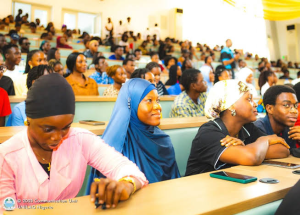
Classroom Year II Social work
Dr. Havugimana Alexis
ABSTRACT
Human existence is one of the fundamental subjects of philosophical, psychological and social inquiry. Although every human being exists, the meaning and value attached to existence differ according to personal experiences, social conditions, opportunities, achievements and individual perceptions. This article examines whether existence should be classified as a gain, a loss or a neutral condition, drawing on philosophical reasoning, psychological perspectives and Social Work principles. The study employed a descriptive, exploratory classroom-based approach involving Year II Social Work students. A total of 92 responses were analysed using frequency distributions and percentage calculations. The findings indicate that 56 students (60.87%) classified existence as neutral, 33 (35.87%) classified it as a gain, while 3 (3.26%) classified it as a loss. The dominance of neutrality suggests that most respondents distinguish the basic condition of being alive from the outcomes and experiences associated with living. The article further argues that human existence should be understood beyond material achievements and that human dignity cannot be measured by socioeconomic status, personal success or individual circumstances. It concludes that existence represents an opportunity, while the quality and meaning of life are influenced by personal experiences, social structures, relationships and opportunities.

Keywords: Existence, gain, loss, neutrality, human dignity, philosophy, psychology, Social Work, human development, social justice.
1. GENERAL INTRODUCTION
Existence is among the oldest and most complex questions in philosophy. Since the beginning of human intellectual inquiry, thinkers have attempted to understand what it means to exist, why human beings live, what gives life meaning and how individuals should evaluate their experiences.
Every human being is born into existence, but not everyone experiences existence in the same way. Some individuals associate life with happiness, opportunities, achievement, love and personal development. Others associate it with suffering, disappointment, poverty, discrimination, exclusion and uncertainty. Meanwhile, some people perceive existence as a neutral condition that cannot automatically be classified as either success or failure.
This raises an important philosophical question:
Does existence itself represent a gain, a loss or a neutral condition?
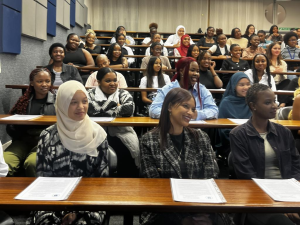
The question was presented to Year II Social Work students to encourage philosophical reflection, critical thinking and an understanding of the relationship between individual experiences and social realities.
From a Social Work perspective, this discussion is particularly important because the profession deals with human experiences, social problems, human rights, social justice, empowerment and the improvement of people’s quality of life.
The central argument of this article is that existence itself does not automatically constitute a gain or a loss. Rather, it provides the fundamental opportunity through which human experiences, decisions, relationships and social conditions acquire meaning.
2. STATEMENT OF THE PROBLEM
Human beings frequently evaluate their lives according to their achievements, possessions, relationships, social positions and experiences.

Society often associates success with wealth, education, employment, professional recognition and economic independence. Conversely, poverty, unemployment, disability, social exclusion and other difficulties may be interpreted as indicators of failure.
However, such interpretations raise a fundamental problem: Can the value of human existence genuinely be determined by achievements and material circumstances?
A wealthy individual may experience loneliness, emotional suffering and dissatisfaction, while a person with limited financial resources may experience love, dignity, solidarity and a meaningful social life.
Similarly, an individual experiencing hardship may still possess opportunities for personal growth and positive contributions to society.
This creates a conceptual challenge for Social Work students, who must distinguish between the inherent worth of human beings and the social conditions influencing their quality of life.
The classroom discussion therefore sought to examine how students understand existence and whether they consider it a gain, a loss or neutral.
3. RESEARCH OBJECTIVES
3.1 General Objective
To examine the philosophical, psychological and social dimensions of human existence and establish whether existence can be classified as a gain, a loss or a neutral condition, based on the perceptions of Year II Social Work students.
3.2 Specific Objectives
1. To examine the philosophical and psychological interpretations of human existence as a gain, a loss or a neutral condition.
2. To analyse the perceptions of Year II Social Work students regarding existence using frequency distributions and percentage analysis.
3. To assess the implications of human existence, dignity and social conditions for Social Work practice, human development and social justice.
4. RESEARCH QUESTIONS
The study was guided by the following research questions:
- How can human existence be understood from philosophical and psychological perspectives?
- How do Year II Social Work students classify existence as a gain, a loss or neutral?
- What are the implications of these perceptions for Social Work practice, human dignity and social justice?
5. CONCEPTUAL AND THEORETICAL FRAMEWORK
5.1 Understanding Existence
Existence refers to the state of being, living or having a presence in the world.

It encompasses several dimensions:
- Physical existence: Being alive and having a physical presence.
- Psychological existence: Consciousness, identity, emotions and self-perception.
- Social existence: Relationships, participation and belonging to society.
- Economic existence: Access to resources and opportunities for material well-being.
- Spiritual and existential existence: Personal values, beliefs, purpose and the search for meaning.
These dimensions demonstrate that existence is not merely a biological condition. It is also influenced by the relationships between individuals and their environments.
5.2 Existentialist Perspective
Existentialist philosophy examines individual freedom, responsibility, choices and the search for meaning.
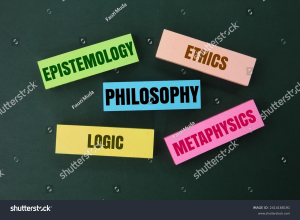
Thinkers such as Jean-Paul Sartre and Søren Kierkegaard explored questions concerning human freedom, individuality and responsibility.
From this perspective, individuals are not simply passive recipients of life experiences. They also participate in shaping the meaning of their existence through decisions, actions and personal commitments.
Existence therefore provides a starting point for human possibilities rather than a predetermined conclusion about success or failure.
5.3 Humanistic Psychological Perspective
Humanistic psychology emphasises human potential, personal development, dignity and self-realisation.
Abraham Maslow’s theory of human motivation explains how human needs range from physiological and safety needs to belonging, esteem and self-actualisation.
Carl Rogers also emphasised personal growth and the development of an individual’s potential.
These perspectives suggest that people may perceive existence as a gain when they experience opportunities for growth, meaningful relationships and personal fulfilment.
5.4 Meaning-Centred Perspective
Viktor Frankl’s work, Man’s Search for Meaning (1959), explores the human capacity to search for meaning even in difficult circumstances.
His perspective provides an important distinction between suffering and the value of human existence.
A person may encounter painful circumstances without losing their inherent dignity or the possibility of finding meaning.
5.5 Human Development Perspective
Amartya Sen’s Development as Freedom (1999) provides another important theoretical foundation.
Sen argues that development should be understood in terms of people’s substantive freedoms and capabilities rather than income alone.
This means that the quality of human existence depends partly on whether people have genuine opportunities to live the lives they value.
6. RESEARCH METHODOLOGY
6.1 Research Design
The study adopted a descriptive and exploratory classroom-based research design.
A quantitative approach was used to organise and analyse the students’ responses, while philosophical and qualitative interpretation was applied to discuss the meaning of the findings.
The study was exploratory because it sought to stimulate students’ thinking about existence rather than establish a universal scientific measurement of human life.
6.2 Study Population
The study focused on Year II students enrolled in the Social Work programme.
The classroom exercise examined students’ understanding of existence through three possible classifications:
- Gain.
- Loss.
- Neutral.
6.3 Sample and Number of Responses
A total of 92 responses were considered in the analysis, based on the supplied category frequencies.

The original stated total was 92 and the individual categories add up to 92:
Loss: 3.
Gain: 33.
Neutral: 56.
The analysis therefore uses 92 as the corrected total.
6.4 Data Collection Method
Data were collected through a classroom question-and-response exercise.
Students were presented with the question:
“EXISTENCE — IS IT A GAIN, A LOSS OR NEUTRAL?”
They were asked to classify existence according to their understanding and philosophical interpretation.
The exercise aimed to encourage independent thinking and reflection on human life, personal experiences, opportunities, achievements and social circumstances.
6.5 Data Analysis Techniques
The collected responses were analysed using descriptive statistics.
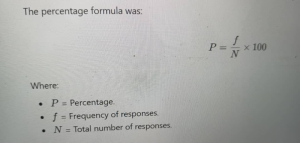
Frequencies and percentages were calculated to establish the distribution of responses across the three categories.
The percentage formula was:
6.6 Ethical Considerations
The study respected the different philosophical perspectives expressed by students.
No category was treated as evidence of an individual’s personal worth or psychological condition.
The discussion recognised that people may have different experiences and interpretations of existence.
6.7 Limitations of the Study
The study has several limitations:
- It involved responses from one group of Year II Social Work students.
- The findings cannot be generalised to all university students or the wider population.
- The numerical data do not provide detailed explanations of why students selected particular categories.
- The classification of existence into three categories simplifies a complex philosophical subject.
- qualitative research would be necessary to explore students’ individual reasoning.
7. PRESENTATION OF RESEARCH FINDINGS
7.1 Distribution of Students’ Responses
The analysis produced the following results:
| Category | Frequency | Percentage |
| Loss | 3 | 3.26% |
| Gain | 33 | 35.87% |
| Neutral | 56 | 60.87% |
| Total | 92 | 100% |
Classification of human existence by Year II Social Work students
Percentage distribution of 92 responses.
| Category | Frequency | Percentage |
| Loss | 3 | 3.26% |
| Gain | 33 | 35.87% |
| Neutral | 56 | 60.87% |
| Total | 92 | 100% |
7.2 Finding One: Existence as Neutral
60.87% — Majority response
A total of 56 students classified existence as neutral.
This was the highest category among the responses.
The finding suggests that most respondents considered existence itself neither an automatic gain nor an automatic loss.
From a philosophical perspective, this interpretation distinguishes the condition of being alive from the outcomes associated with living.
For example, being born does not automatically mean that someone has achieved success. Similarly, experiencing difficulties does not automatically mean that someone’s life has no value.
Neutrality therefore represents a conceptual starting point from which different experiences and outcomes may emerge.
7.3 Finding Two: Existence as Gain
35.87%
A total of 33 students classified existence as a gain.
This finding indicates that a considerable proportion of respondents associated existence with positive possibilities.
These possibilities may include:
- Opportunities for education.
- Personal development.
- Love and meaningful relationships.
- Professional achievement.
- Economic empowerment.
- Social participation.
- The ability to contribute to humanity.
From a human development perspective, existence may be perceived as a gain when individuals have opportunities to develop their capabilities and pursue meaningful objectives.
7.4 Finding Three: Existence as Loss
3.26%
Only three students classified existence as a loss.
This was the smallest category.
The finding introduces an important discussion about human suffering, social inequalities and negative life experiences.
However, the numerical result does not establish the reasons behind these responses.
It would therefore be inappropriate to conclude that these students necessarily had negative personal experiences or held a particular psychological position.
Further interviews or classroom discussions would be required to understand their reasoning.
8. DISCUSSION OF FINDINGS
8.1 The Dominance of Neutrality: Existence Is Not Automatically Success or Failure
The finding that 60.87% of students classified existence as neutral provides an important foundation for philosophical discussion.
Existence is the fundamental condition of being. It does not independently establish whether a person has succeeded or failed.
Consider two individuals:
- The first individual possesses considerable wealth but experiences loneliness, dissatisfaction and emotional difficulties.
- The second individual has limited financial resources but enjoys meaningful relationships, personal dignity and a strong sense of purpose.
- Which individual has a more successful existence?
The question demonstrates that existence cannot be evaluated using material wealth alone.
The dominant neutral classification suggests that most respondents distinguished between existence itself and the outcomes associated with human experiences.
8.2 Existence as a Gain: The Value of Opportunities
The 35.87% who classified existence as a gain highlight the positive dimensions of human life.
Existence gives individuals opportunities to learn, create, love, develop relationships and contribute to society.
From the perspective of human development, opportunities and freedoms are important dimensions of well-being.
Amartya Sen’s capability approach supports the argument that development should be evaluated through people’s real opportunities to achieve things they value.
Therefore, existence may be experienced as a gain when people are able to exercise their abilities, participate in society and pursue meaningful lives.
8.3 Existence as a Loss: The Influence of Social Realities
The 3.26% classification of existence as a loss raises questions about suffering and difficult human experiences.
Poverty, violence, discrimination, unemployment, insecurity and social exclusion may negatively affect people’s quality of life.
However, Social Work requires us to distinguish between negative social conditions and the inherent value of individuals.
A person experiencing poverty is not a failed human being.
A person experiencing unemployment is not without dignity.
A person living with a disability is not less valuable than another person.
Consequently, the concept of loss should be examined in relation to circumstances, experiences and outcomes rather than used to judge human worth.
8.4 Individual Responsibility versus Social Structures
Another important finding from this discussion is the need to understand the relationship between individual decisions and social structures.
Although individuals make choices, their opportunities are influenced by the environments in which they live.
For example:
- A student may want to continue education but lack financial resources.
- A graduate may possess qualifications but face limited employment opportunities.
- A family may aspire to better housing but experience economic insecurity.
- A young person may want to establish a business but lack access to capital.
These situations demonstrate that human outcomes cannot always be explained through personal responsibility alone.
Social Work must therefore address both individual challenges and structural inequalities.
8.5 Can Existence Be a Gain and a Loss Simultaneously?
The three classifications provide a useful framework, but human experiences are more complex.
An individual may experience:
| Dimension | Possible experience |
| Economic | Gain |
| Psychological | Loss |
| Social | Gain |
| Professional | Loss |
| Intellectual | Gain |
| Family relationships | Gain or loss |
For example, someone may achieve professional success while experiencing family difficulties.
Another person may experience financial hardship but enjoy meaningful relationships and personal fulfilment.
This demonstrates that gain and loss can coexist within one person’s existence.
Consequently, a single classification cannot fully represent the complexity of human life.
9. IMPLICATIONS FOR SOCIAL WORK PRACTICE
The findings have important implications for Year II Social Work students and future practitioners.
9.1 Respect for Human Dignity
Every individual has inherent worth, regardless of their economic circumstances, educational achievements or social position.
Social workers must avoid judging people based on their possessions or personal difficulties.
9.2 Promotion of Social Justice
Social workers should identify and address inequalities that restrict people’s opportunities.
This includes advocating for access to education, healthcare, employment, housing and social protection.
9.3 Empowerment and Resilience
Individuals should be supported to identify their strengths, develop their capabilities and participate in decisions affecting their lives.
9.4 Holistic Assessment
Social workers should assess individuals through psychological, economic, cultural, environmental and social dimensions.
A person’s experience cannot be fully understood through one indicator.
9.5 Social Inclusion
The promotion of participation, equality and belonging helps individuals and communities improve their quality of life.
10. CRITICAL THINKING AND CLASSROOM REFLECTION
The discussion of existence should not end with the numerical findings. It should encourage students to question assumptions and develop independent arguments.
The following questions can guide further classroom discussions:
- If existence is neutral, what gives human life meaning?
- Can a person have a successful life without wealth?
- Is poverty evidence of personal failure or sometimes a consequence of social injustice?
- Can suffering become a source of personal growth?
- Can an individual experience gain and loss simultaneously?
- Should society measure human worth according to economic productivity?
- What is the responsibility of Social Workers in improving the quality of human existence?
- Is being alive the same as living meaningfully?
These questions are intended to develop critical thinking, philosophical reasoning and professional understanding.
11. GENERAL CONCLUSION
This study examined the question of whether human existence should be classified as a gain, a loss or a neutral condition.
Using responses from 92 Year II Social Work students, the findings established that 56 students (60.87%) classified existence as neutral, 33 (35.87%) classified it as a gain and 3 (3.26%) classified it as a loss.
The dominance of neutrality suggests that most respondents distinguish the basic condition of existence from the achievements, experiences and challenges associated with living.
The gain classification demonstrates recognition of life’s opportunities, while the loss classification provides an opportunity to discuss suffering, inequality and difficult social conditions.
From philosophical and psychological perspectives, existence is a complex phenomenon involving identity, freedom, consciousness, relationships, personal development and the search for meaning.
From a Social Work perspective, the discussion reinforces the importance of human dignity, social justice, empowerment and social inclusion.
The study therefore concludes that existence itself can be understood as an opportunity rather than an automatic measure of success or failure.
Human beings should not be judged by the difficulties they experience, the wealth they possess or the achievements they accumulate. Their inherent dignity remains valuable regardless of their circumstances.
Ultimately, the meaning of existence emerges through the interaction between human potential, individual experiences, social opportunities and the contributions people make to the world.
12. EXISTENCE: THE OPPORTUNITY BETWEEN GAIN AND LOSS
Existence is neither a certificate of victory nor a declaration of defeat. It is the beginning of a journey whose meaning unfolds through experiences, decisions, relationships, struggles and opportunities.
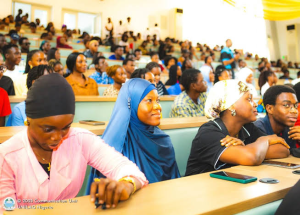
A person may possess wealth but lack peace; another may possess little but contribute immeasurably to humanity. One may experience failure today and discover wisdom tomorrow. Another may celebrate success while silently struggling with an invisible burden.
Never confuse poverty with worthlessness, suffering with failure, wealth with happiness or social recognition with human greatness.
To exist is to have an opportunity. To live is to experience reality. To live meaningfully is to transform existence into wisdom, dignity, responsibility and positive contributions to humanity.
— Dr. Havugimana Alexis’Quotes
- “Being alive is neither an automatic victory nor a guaranteed failure; existence is an opportunity whose meaning is shaped by how we live.”
— Dr. Havugimana Alexis
- “Existence begins without a scorecard; it is our experiences, decisions and circumstances that give it different meanings.”
— Dr. Havugimana Alexis
- “A human being does not become valuable by succeeding, nor worthless by failing; human dignity exists beyond the boundaries of achievement.”
— Dr. Havugimana Alexis
- “You cannot calculate the meaning of someone’s existence by adding wealth, subtracting suffering and dividing achievements; human life is more complex than numbers.”
— Dr. Havugimana Alexis
5.”To exist is to be present in the world; to discover purpose is to understand what your presence can mean to the world.”
— Dr. Havugimana Alexis
- “The greatest question is not simply why we exist, but what meaning we create from the opportunity of existence.”
— Dr. Havugimana Alexis
- “Success and failure describe experiences, not the total value of a human being.”
— Dr. Havugimana Alexis
- “Life does not explain its meaning to everyone; sometimes, the individual must search for meaning within the silence of existence.”
— Dr. Havugimana Alexis
- “We are given time to exist, but we are responsible for how we use it, what we learn from it and what we leave behind.”
— Dr. Havugimana Alexis
- “One person celebrates existence as a blessing, another experiences it as a burden, while a third questions its meaning; the same condition of being can produce different human interpretations.”
— Dr. Havugimana Alexis
- “Sometimes, the greatest struggle is not the condition of being alive, but the mind’s interpretation of the life we are living.”
— Dr. Havugimana Alexis
12.”Human beings do not experience life through circumstances alone; they also experience it through emotions, memories, expectations and perceptions.”
— Dr. Havugimana Alexis
- “Behind a successful face may exist an invisible struggle, and behind a struggling face may exist extraordinary strength.”
— Dr. Havugimana Alexis
- “Losing an opportunity does not mean losing your identity; a painful experience should never become the definition of your entire existence.”
— Dr. Havugimana Alexis
- “Two people may inhabit the same world, experience similar circumstances and still interpret existence through completely different psychological realities.”
— Dr. Havugimana Alexis
- “Your difficult experiences may explain where you have been, but they do not necessarily determine where your existence can take you.”
— Dr. Havugimana Alexis
- “Material possessions may improve living conditions, but they cannot independently guarantee emotional peace, belonging or psychological fulfilment.”
— Dr. Havugimana Alexis
18.”Never allow society’s measurement of your success to become the measurement of your personal worth.”
— Dr. Havugimana Alexis
19.”Sometimes existence feels heavy not because life has stopped offering opportunities, but because the mind has become overwhelmed by the weight of experience.”
— Dr. Havugimana Alexis
- “Yesterday may explain your pain, today may test your strength, but tomorrow may reveal opportunities that your present circumstances cannot yet show.”
— Dr. Havugimana Alexis
- “Human dignity is not a reward for economic success; it is a fundamental value that no poverty, disability or social position should take away.”
— Dr. Havugimana Alexis
- “Poverty is a socioeconomic condition, not a definition of human worth; never confuse a person’s lack of resources with a lack of value.”
— Dr. Havugimana Alexis
23″A society cannot claim to value human existence while denying some of its members equal opportunities to live with dignity.”
— Dr. Havugimana Alexis
- “Social Work is not about deciding whose existence is successful or unsuccessful; it is about helping people overcome barriers that prevent them from living with dignity.”
— Dr. Havugimana Alexis
25.”Different circumstances create different experiences, but differences in wealth, education and social status should never create differences in human dignity.”
— Dr. Havugimana Alexis
26″When society excludes an individual, the problem may not be the individual’s existence, but the social structures that refuse to recognise their place.”
— Dr. Havugimana Alexis
- “True empowerment begins when people stop being treated as helpless objects of social problems and become recognised as active participants in their own development.”
— Dr. Havugimana Alexis
- “The greatness of human existence is not measured only by what one accumulates, but also by what one contributes to the lives of others.”
— Dr. Havugimana Alexis
- “Do not judge a person’s existence by the position they occupy in society; judge society by how it treats those who occupy the most difficult positions.”
— Dr. Havugimana Alexis
30.”Existence is the opportunity, experience is the journey, wisdom is the lesson, dignity is the foundation, and the positive impact we leave behind becomes part of our human legacy.”
— Dr. Havugimana Alexis
ARE WE WINNING, LOSING OR SIMPLY EXISTING?
Perhaps human existence is not a competition in which everyone must win or lose. Some are building, others are recovering, some are discovering themselves, while others are still searching for the meaning of their presence.
The mistake is to assume that every life must produce the same results to deserve respect.
Existence should not be judged only by what a person has achieved, but also understood through what they have experienced, what they have overcome, what they value and what they contribute to humanity.
Dr. Havugimana Alexis
Dr. Havugimana Alexis
Lecturer and Researcher
University of Technology and Arts of Byumba (UTAB)
13. REFERENCES
- Frankl, V. E. (1959). Man’s Search for Meaning. Beacon Press.
- Kierkegaard, S. (1980). The Concept of Anxiety. Princeton University Press. (Original work published 1844).
- Maslow, A. H. (1943). A theory of human motivation. Psychological Review, 50(4), 370–396.
- Rogers, C. R. (1961). On Becoming a Person: A Therapist’s View of Psychotherapy. Houghton Mifflin.
- Sartre, J.-P. (2007). Existentialism Is a Humanism. Yale University Press.
- Sen, A. (1999). Development as Freedom. Oxford University Press.
- United Nations. (1948). Universal Declaration of Human Rights. United Nations.
- International Federation of Social Workers. (2014). Global Definition of Social Work.