

District Councils in Rwanda will comprise 17 councillors representing different categories of the population. These will include eight general councillors, five women councillors, and four representatives of special groups.
This composition reflects the efforts of local government institutions to ensure that District Councils include people from different segments of society, so that their views and interests are represented in decision-making at the district level.
How the 17 Seats Will Be Distributed
The election of District Council members will take place in three different categories.
1. Four Representatives of Special Groups
These are individuals who represent specific groups within the population in the District Council. They include:
-
The District Coordinator of the National Women’s Council.
-
The District Coordinator of the National Youth Council.
-
The District Coordinator of the National Council of Persons with Disabilities.
-
The District representative of the Private Sector Federation (PSF).
2. Five Women Councillors
Five seats are reserved for women in the District Council to ensure compliance with the principle of at least 30% women’s representation in decision-making institutions.
These councillors are elected by an electoral college comprising representatives of Sector Councils and structures of the National Women’s Council, in accordance with electoral laws.
3. Eight General Councillors
These councillors are indirectly elected through an electoral college comprising representatives of various local government structures, including Sector Councils, structures of the National Women’s Council, National Youth Council, National Council of Persons with Disabilities, and the Private Sector Federation.
Candidates campaign for these positions and are subsequently elected by secret ballot by the designated electoral college.
Dates for District Council Elections
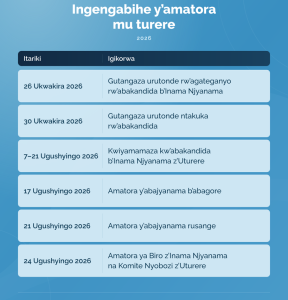
The 2026 local government electoral programme provides for the election of District Councillors in different stages.
The dates are as follows:
| Date | Electoral Activity |
|---|---|
| 14 November 2026 | Election of Executive Committees of the National Women’s Council, National Youth Council, and National Council of Persons with Disabilities at district level |
| 17 November 2026 | Election of the five women councillors |
| 21 November 2026 | Election of the eight general councillors |
| 24 November 2026 | Election of the District Council Bureau and the District Executive Committee |
These dates are provided for in the electoral programme approved by the relevant electoral authorities.
Does Winning a Councillor Election Automatically Make Someone a Mayor?
No. Winning an election as a councillor does not automatically make a candidate the District Mayor.
For someone to become eligible for the position of Mayor, they must first be elected as a District Councillor. Thereafter, the elected members of the District Council vote to elect the Mayor and the two Vice Mayors.
On 24 November 2026, the following positions will be elected:
-
The President and Vice-President of the District Council Bureau.
-
The District Mayor.
-
The Vice Mayor in charge of Economic Development.
-
The Vice Mayor in charge of Social Affairs.
Therefore, councillor elections are particularly important because they determine the individuals who will participate in electing the new district leadership.
The composition of District Councils demonstrates how local government institutions seek to give a voice to different segments of the population. Having 17 councillors, including women, general councillors, and representatives of special groups, is intended to ensure that decisions made at the district level reflect the interests and perspectives of different members of society.
The key point is that being elected as a councillor is the first step towards district leadership. However, becoming a Mayor also requires being elected by fellow members of the District Council.
2. Who Are the Voters, and How Are Candidates Allowed to Campaign?
District Council elections in Rwanda will be conducted indirectly and by secret ballot. Each category of councillors will have its own electoral college, as provided for by the Presidential Order governing these elections.
This means that not all citizens will go to polling stations to elect District Councillors directly. Instead, electoral colleges comprising representatives of different local government structures will be used.
1. Who Elects the General Councillors?
According to Article 7 of the Presidential Order, the electoral college for general councillors comprises the following:
-
Members of the Bureaus of Cell Councils within the district.
-
Members of the Sector Councils within the district.
-
Members of the Executive Committee of the National Women’s Council at district level.
-
Members of the Executive Committee of the National Youth Council at district level.
-
Members of the Executive Committee of the National Council of Persons with Disabilities at district level.
-
Members of the Private Sector Federation Committee at district level.
These individuals constitute the electoral college responsible for electing general councillors through secret ballot.
2. Who Elects the Women Councillors (30%)?
For the seats reserved for women councillors, the electoral college comprises three categories:
-
Members of the Sector Councils within the district.
-
Members of the Executive Committees of the National Women’s Council at sector level.
-
Members of the Executive Committee of the National Women’s Council at district level.
This is provided for under Article 8 of the Presidential Order.
3. How Are Candidates Allowed to Campaign?
Article 28 of the Organic Law governing elections provides for different methods through which candidates may conduct their campaigns.
These include:
-
Using printed materials, posters, and other campaign materials that comply with the law.
-
Campaigning through the media.
-
Using information and communication technology, including social media platforms.
-
Displaying photographs and other campaign materials in authorised locations.
-
On election day, a candidate may address the electoral college for a period not exceeding five minutes, at the place and time designated by the National Electoral Commission.
Important: The location and time for candidates to address the electoral college are determined by the National Electoral Commission. A candidate is not allowed to independently choose where to conduct this activity.
4. Where Are Candidates Allowed to Display Campaign Materials?
The regulations provide that candidates may display campaign materials in the following places:
-
On public buildings, in locations designated by the District or Sector authorities.
-
On privately owned buildings, with the prior consent of the owners.
-
On privately owned vehicles, with the prior consent of their owners.
-
On other privately owned property, with the prior consent of the owners.
Places Where Campaign Materials Are Prohibited
Candidates are not allowed to display campaign materials:
-
At health facilities.
-
At schools.
-
At places of worship.
-
At courts of law.
-
On electricity poles, except those fitted with designated advertising boards in accordance with applicable regulations.
These restrictions are intended to protect cleanliness, public safety, the rights of others, and the dignity of places used by the public.
5. Can a Candidate Have a Representative?
Yes. The regulations allow a candidate to appoint a representative during campaign activities or the election process.
However, to do so, the candidate must submit a written notification to the President of the National Electoral Commission, identifying the person who will represent them at least 48 hours before the activity begins.
A person eligible to represent a candidate must:
-
Be a Rwandan citizen.
-
Be at least 18 years old.
-
Be registered on the voters’ register.
-
Not be disqualified from voting.
-
Possess a national identity card or another legally recognised substitute document.
The candidate’s representative must also present an authorisation document allowing them to represent the candidate, as provided for in Annex 2 of National Electoral Commission Instruction No. 001/NEC/26 of 1 October 2026.
This is provided for under Article 36 of the above-mentioned instruction.
6. What Should Candidates Focus on?
During their campaigns, candidates should focus on issues that demonstrate:
-
Their vision for the development of the district.
-
How they intend to promote and protect the interests of citizens.
-
The needs and challenges of the people they seek to represent.
-
Their knowledge and capacity to participate in decision-making.
-
How they intend to cooperate with other government institutions.
This electoral arrangement demonstrates that election as a District Councillor does not take place through direct universal voting by all citizens. Instead, it is conducted through electoral colleges established by law for each category.
Another important point is that candidates have the right to campaign, use the media and technology, and appoint representatives. However, all these activities must comply with the regulations of the National Electoral Commission.
SHARE THESE THOUGHTS WITH ME TODAY
30 Inspirational Quotes on Leadership, Governance, Democracy, Accountability and Community Development
By Dr. Havugimana Alexis
-
“Leadership begins when a person understands that the position they hold is not an opportunity to exercise power over others, but a responsibility to serve them.”
— Dr. Havugimana Alexis
-
“A strong society is built when everyone is given a voice and their ideas are taken into consideration.”
— Dr. Havugimana Alexis
-
“Democracy is not only about electing leaders; it is also about ensuring that those leaders serve the people and are held accountable for their actions.”
— Dr. Havugimana Alexis
-
“True representation means speaking up for those who lack the ability or opportunity to make their voices heard.”
— Dr. Havugimana Alexis
-
“A leadership position becomes meaningful when it is used to transform the lives of citizens.”
— Dr. Havugimana Alexis
-
“Good governance begins with respect for the law and putting the common interest first.”
— Dr. Havugimana Alexis
-
“The strength of a District Council is not measured by the number of its members, but by the quality of the decisions it makes.”
— Dr. Havugimana Alexis
-
“Representation without accountability is an empty promise to the people.”
— Dr. Havugimana Alexis
-
“A good leader listens before making decisions and consults others before taking action.”
— Dr. Havugimana Alexis
-
“Public service is not an opportunity to be served; it is an opportunity to serve others.”
— Dr. Havugimana Alexis
-
“The future of local governance depends on leaders who understand the challenges faced by ordinary citizens.”
— Dr. Havugimana Alexis
-
“Having people with diverse perspectives and experiences in leadership helps ensure that decisions are informed by a wider range of ideas.”
— Dr. Havugimana Alexis
-
“Women’s participation in leadership is not simply about counting the positions they occupy; it is about recognising their contribution to decision-making.”
— Dr. Havugimana Alexis
-
“Youth representation in leadership is an investment in ideas, energy, and the future of the nation.”
— Dr. Havugimana Alexis
-
“Inclusion means ensuring that no citizen is left behind on the journey towards development.”
— Dr. Havugimana Alexis
-
“Elections give leaders the mandate to govern, but integrity is what earns them the trust of the people.”
— Dr. Havugimana Alexis
-
“The secret of good leadership is not controlling people, but empowering them to participate in development.”
— Dr. Havugimana Alexis
-
“A leader who respects the law demonstrates respect for the people they lead.”
— Dr. Havugimana Alexis
-
“Democracy becomes stronger when citizens understand both their rights and their responsibilities.”
— Dr. Havugimana Alexis
-
“The quality of local governance is reflected in how effectively national development reaches ordinary citizens.”
— Dr. Havugimana Alexis
-
“Do not aspire to lead merely to occupy a leadership seat; aspire to lead so that you can make a difference.”
— Dr. Havugimana Alexis
-
“Accountability is the foundation that connects citizens’ trust in their leaders with the effective performance of institutions.”
— Dr. Havugimana Alexis
-
“Transparent elections build public confidence in national institutions and strengthen democratic principles.”
— Dr. Havugimana Alexis
-
“A good leader does not fear being questioned; instead, they see questions as opportunities for self-correction and improved performance.”
— Dr. Havugimana Alexis
-
“Community development cannot be achieved through promises alone; it requires vision, commitment, and practical action.”
— Dr. Havugimana Alexis
-
“A leader’s ability is not measured by the power they possess, but by how responsibly they use it.”
— Dr. Havugimana Alexis
-
“A representative of the people should never forget that behind every vote lies a citizen’s trust and hope.”
— Dr. Havugimana Alexis
-
“Bringing governance closer to the people is not merely about distributing power; it is about bringing decision-making closer to citizens.”
— Dr. Havugimana Alexis
-
“The legacy of a person who has served the public is measured by the positive changes they leave in people’s lives.”
— Dr. Havugimana Alexis
-
“Lead with wisdom, exercise authority with integrity, represent others with courage, and serve people with humanity.”
— Dr. Havugimana Alexis
A Final Reflection
“Democracy gives citizens a voice, leadership translates that voice into action, and accountability ensures that the people’s voice is never betrayed.”
Dr. Havugimana Alexis
REFERENCES
-
Commission Nationale Électorale. (2026). Amabwiriza ya Komisiyo y’Igihugu y’Amatora ku matora y’abayobozi b’inzego z’imitegekere y’igihugu zegerejwe abaturage n’Abagize Inama z’Igihugu [National Electoral Commission instructions on elections of leaders of decentralised government entities and members of National Councils]. https://www.nec.gov.rw/elections/electoral-laws-acts
-
Office of the United Nations High Commissioner for Human Rights. (2014). The core international human rights treaties. United Nations. https://digitallibrary.un.org/record/765800
-
Republic of Rwanda. (2023). Constitution of the Republic of Rwanda. Official Gazette of the Republic of Rwanda, Special of 4 August 2023. https://www.nec.gov.rw/fileadmin/user_upload/NEC/Publications/Electoral_Acts/Constitutuion_of_the_Republic_of_Rwanda-2023.pdf
-
Republic of Rwanda. (2026). Iteka rya Perezida ryerekeye amatora y’abayobozi b’inzego z’imitegekere y’igihugu zegerejwe abaturage [Presidential Order relating to elections of leaders of decentralised government entities]. Official Gazette No. 31 Bis of 3 August 2026. https://www.nec.gov.rw/elections/electoral-laws-acts
-
Republic of Rwanda. (2026). Organic Law No. 002/2026.OL of 25 May 2026 governing elections. Official Gazette No. 21 Bis of 25 May 2026. https://amategeko.gov.rw/view/toc/doc/10602/11164
-
United Nations. (2006). Convention on the Rights of Persons with Disabilities. United Nations General Assembly Resolution A/RES/61/106. https://www.un.org/disabilities/documents/convention/convoptprot-e.pdf
-
United Nations. (2015). Transforming our world: The 2030 Agenda for Sustainable Development. https://sdgs.un.org/2030agenda
-
United Nations. (n.d.). The 17 Sustainable Development Goals: Goal 5—Gender equality and Goal 16—Peace, justice and strong institutions. https://sdgs.un.org/goals