Abstract
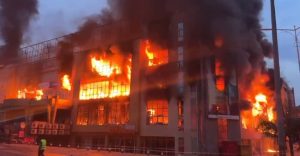
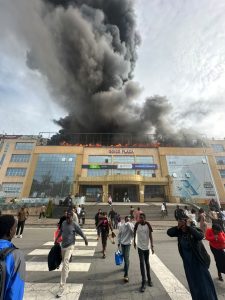
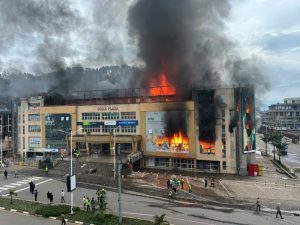
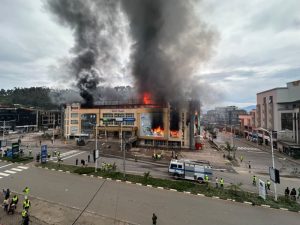
Commercial market fires pose serious threats to human life, property, employment, business continuity and local economic development. Their consequences can be particularly severe in multistorey commercial buildings accommodating large numbers of traders, customers, financial institutions and retail businesses. On 10 October 2026, a major fire affected the GOICO commercial building in Musanze District, Rwanda, destroying commercial premises and merchandise and disrupting the livelihoods of numerous traders. Reports from the incident described the rapid spread of the fire, challenges encountered during firefighting operations, concerns about the availability of fire suppression infrastructure and the economic vulnerability of affected businesses.
This article examines the GOICO fire through the framework of disaster risk assessment and prevention. It focuses on fire hazards associated with commercial activities, building safety, welding operations, electrical installations, fire hydrants, emergency access, occupancy management and institutional preparedness. It also examines the economic and social implications of market fires and proposes measures to strengthen disaster risk reduction in Rwanda’s commercial markets. The study adopts a qualitative, desk-based case-study approach using a published account of the incident and established disaster management principles. Allegations reported by witnesses are treated as claims requiring independent verification rather than established findings of fault or causation. The article argues that effective fire disaster management requires a preventive approach integrating risk assessment, enforcement of safety requirements, emergency preparedness, stakeholder accountability and post-disaster recovery planning.
Keywords: Disaster management, fire risk assessment, fire prevention, commercial markets, GOICO Plaza, Musanze, Rwanda, emergency preparedness, economic resilience.
1. Introduction
Commercial markets play a significant role in economic development by facilitating trade, creating employment, supporting entrepreneurship and connecting producers with consumers. In Rwanda, large commercial centres provide business opportunities for small-scale traders, wholesalers, retailers, financial institutions and other service providers.
However, commercial concentration also creates potential disaster risks. A multistorey building accommodating thousands of traders and large quantities of merchandise may face significant challenges if fire detection, suppression, evacuation and emergency access systems are inadequate or poorly maintained.
Fire hazards can arise from electrical faults, hot work such as welding, combustible merchandise, unsafe storage, overloaded electrical connections and other ignition sources. Once a fire starts, its consequences depend on several interacting factors, including building design, compartmentation, ventilation, combustible materials, fire protection systems, evacuation arrangements and the capacity of emergency responders.
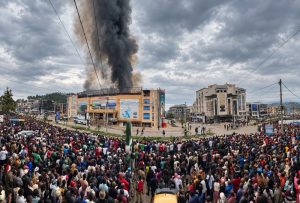
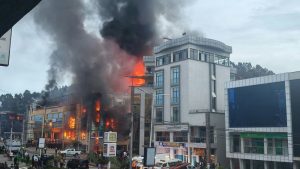
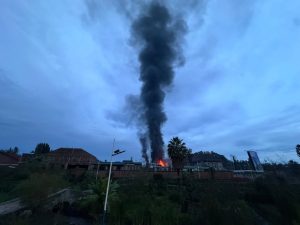
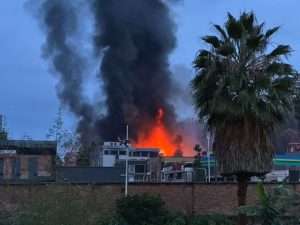
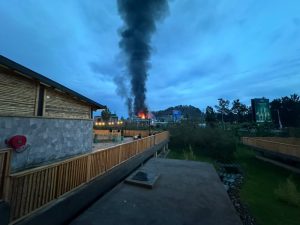
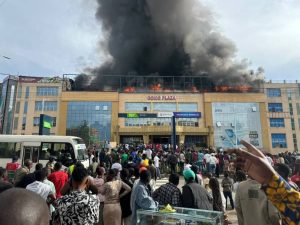
The GOICO commercial building fire in Musanze on 10 October 2026 provides an important case for examining these issues. According to the account supplied for this study, the fire began at approximately 15:30 on Saturday and spread through the five-storey building. Witnesses alleged that welding activities were taking place on an upper floor, that firefighting resources initially available were insufficient for the scale of the incident, and that concerns existed about the operation of fire hydrants and the density of commercial occupancy.
These accounts raise important questions about fire prevention, building safety, emergency response and disaster governance. However, the definitive cause of the fire and the accuracy of individual allegations must be established through an official technical investigation.
This article therefore approaches the GOICO incident as both a specific disaster and an opportunity to examine preventive measures that could strengthen the safety and resilience of commercial markets throughout Rwanda.
2. Background of the GOICO Market Fire
GOICO, identified in the supplied report as Gorilla Investment Company, operates a commercial building in Musanze District. According to the report, the project was established by 89 private investors from Musanze, who mobilized approximately RWF 7.5 billion, including a substantial proportion obtained through bank financing. The building reportedly began operating in 2017.
The five-storey commercial facility accommodated a wide range of businesses, including clothing shops, wholesalers, plastic products retailers, electronics businesses, financial institutions and large retail outlets.
The report states that more than 2,000 traders operated in the building and that over 15,000 people visited the market daily. These figures are reported estimates and require confirmation through official records.
At approximately 15:30 on 10 October 2026, a major fire reportedly broke out on the fifth floor. A witness identified as Nshimiye alleged that welding was being conducted on the upper floor when the fire began. According to his account, the fire spread to clothing and other materials before extending to lower floors, eventually affecting a substantial part of the building.
Another witness, Angélique, reportedly stated that the police arrived and restricted access to the affected area. She also alleged that the initial firefighting equipment was insufficient to reach the fire at the upper level and that additional capabilities were required.
The report further recorded concerns raised by traders and other witnesses regarding fire hydrants, the density of businesses, parking arrangements and access for firefighting vehicles. They questioned whether the building’s fire protection systems were operational and whether previous concerns about overcrowding had received sufficient attention.
The account indicated that firefighting operations continued overnight and into Sunday morning, 11 October 2026. The Mayor of Musanze District, Nsengimana Claudien, reportedly urged residents not to enter the building while firefighting operations continued.
These details provide the context for the present analysis. They do not, by themselves, establish the technical cause of the fire, whether specific safety requirements were violated, or whether any particular person or institution bears legal responsibility.
3. Statement of the Problem
Major fires in commercial buildings can produce extensive losses when ignition, fire spread, building vulnerability and emergency response challenges combine. The consequences extend beyond the physical structure to include merchandise, business equipment, employment, household income, financial obligations and local economic activity.
The GOICO incident raises several questions about the effectiveness of fire risk assessment and prevention in large commercial facilities. These include the management of welding and other hot-work activities, the inspection and maintenance of fire hydrants, the availability of firefighting equipment, the accessibility of emergency routes and the management of occupancy in multistorey buildings.
The reported concerns also raise a broader governance question: how can building owners, market administrators, traders, technical inspectors and emergency services ensure that identified hazards are corrected before they develop into major disasters?
Without verified technical findings, it would be premature to attribute the GOICO fire to any single cause or management failure. Nevertheless, the incident demonstrates the need for systematic investigation and stronger preventive arrangements in commercial markets.
The central research problem is therefore how fire disaster risk assessment, prevention and preparedness can be strengthened to reduce the probability and consequences of similar incidents in Rwanda.
4. Research Objectives
4.1 General Objective
To assess fire disaster risks and prevention strategies in commercial markets, using the GOICO building fire in Musanze, Rwanda, as a case study.
4.2 Specific Objectives
- To examine potential fire hazards and vulnerability factors associated with multistorey commercial markets.
- To assess the effectiveness of fire detection and suppression systems, emergency access, and evacuation arrangements in commercial markets.
- To propose practical strategies for strengthening fire prevention, emergency preparedness, and post-disaster recovery in commercial markets in Rwanda.
5. Research Questions
This study is guided by the following research questions:
- What potential fire hazards and vulnerability factors are associated with multistorey commercial markets, as illustrated by the GOICO Market fire in Musanze, Rwanda?
- To what extent are fire detection and suppression systems, emergency access routes, and evacuation arrangements adequate for preventing and managing fire disasters in commercial markets?
- What practical strategies can be adopted to strengthen fire prevention, emergency preparedness, and post-disaster recovery in commercial markets in Rwanda?
6. Literature Review
6.1 Disaster risk assessment
Disaster risk assessment is a systematic process of identifying hazards, examining exposure and vulnerability, evaluating existing capacities and determining measures to reduce potential losses.
The United Nations Office for Disaster Risk Reduction emphasizes the importance of understanding disaster risks as a foundation for effective prevention and preparedness. The Sendai Framework for Disaster Risk Reduction 2015–2030 identifies understanding disaster risk, strengthening disaster risk governance, investing in risk reduction and improving preparedness as key priorities (UNDRR, 2015).
Applied to commercial buildings, this approach requires more than identifying possible sources of ignition. It also involves evaluating the conditions that could permit fire to spread, the number of people and assets exposed, the reliability of protective systems and the capacity to evacuate occupants and control an incident.
Some definitions defined during this topics
- Disaster Management: The organized process of planning and implementing measures to prevent disasters where possible, reduce risks, prepare for emergencies, respond to incidents and support recovery.
- Disaster Risk Reduction (DRR): The systematic effort to prevent new disaster risks, reduce existing risks and strengthen the resilience of people and communities.
- Hazard: A potentially harmful event, condition or activity that may cause injury, loss of life, property damage, economic disruption or environmental harm.
- Fire Hazard: Any source, activity or condition that could cause a fire or contribute to its development and spread, such as faulty electrical wiring, welding sparks or combustible materials.
- Risk Assessment: The systematic process of identifying hazards, analyzing exposure and vulnerability, and evaluating the likelihood and potential consequences of harmful events.
- Vulnerability: The physical, social, economic or organizational conditions that increase the susceptibility of people, buildings or businesses to the effects of a hazard.
- Exposure: The presence of people, property, infrastructure, businesses or other valuable assets in locations where hazards may occur.
- Fire Prevention: Measures designed to prevent fires from starting, including safe electrical installations, controlled welding operations, proper storage and regular safety inspections.
- Fire Suppression: Actions and systems used to control or extinguish a fire, including appropriate extinguishers, hydrants, standpipes and sprinkler systems.
- Fire Detection System: Equipment designed to identify signs of fire, such as smoke or excessive heat, and alert occupants or responsible personnel.
- Emergency Preparedness: The planning, training, provision of resources and organization of procedures needed to respond effectively to an emergency.
- Emergency Response: Actions taken during or immediately after an incident to protect lives, control hazards, limit damage and provide urgent assistance.
- Evacuation Plan: A documented procedure that explains how occupants should leave a dangerous building safely using designated escape routes and exits.
- Fire Safety Audit: A systematic examination of a building’s fire hazards, protective equipment, evacuation arrangements, maintenance records and compliance with applicable safety requirements.
- Business Continuity: The ability of an organization or business to maintain essential operations or restore them within an acceptable period following a disruption.
- Disaster Resilience: The capacity of individuals, institutions, businesses and communities to withstand, adapt to, recover from and learn from hazardous events.
- Emergency Access: The availability of suitable, unobstructed routes and operational spaces that allow emergency services and firefighting equipment to reach an incident.
- Hot-Work Permit: A formal authorization process used to control potentially hazardous activities that generate heat, sparks or flames, such as welding and cutting.
- Post-Disaster Recovery: The process of restoring livelihoods, services, infrastructure, economic activities and community well-being after a disaster.
- Risk Governance: The systems, rules, responsibilities and coordination arrangements through which institutions and stakeholders assess, manage and monitor disaster risks.
- Disaster Management: The systematic process of planning and implementing measures to prevent disasters where possible, reduce risks, prepare for emergencies, respond to incidents and support recovery.
- Fire Risk Assessment: The systematic process of identifying potential fire hazards, examining who and what may be exposed, evaluating the likelihood and consequences of fire, and determining appropriate risk-control measures.
- Fire Prevention: The actions taken to prevent fires from starting and to reduce the conditions that may lead to ignition and fire spread, including safe electrical practices, controlled welding activities and regular safety inspections.
- Commercial Markets: Physical or organized business spaces where traders, retailers, wholesalers and service providers conduct economic activities involving the exchange of goods and services. These may include individual shops, market stalls and multistorey commercial buildings.
- GOICO Plaza: The commercial building in Musanze District, Rwanda, identified in the incident account used for this study as the site of the fire reported on 10 October 2026. Its specific building characteristics, the extent of the damage and the cause of the fire should be established using reliable records and official investigation findings.
- Musanze, Rwanda: Musanze is a district in Rwanda’s Northern Province. In this study, it provides the geographical context for examining the reported GOICO commercial building fire and its implications for fire safety, disaster management and local economic activities.
- Emergency Preparedness: The planning, training, organization and provision of resources necessary to respond effectively to emergencies. In commercial markets, this includes fire alarms, evacuation plans, emergency communication, firefighting equipment and regular drills.
- Economic Resilience: The capacity of individuals, businesses and communities to withstand economic shocks, adapt to disruptions and recover their livelihoods and productive activities after a crisis. Following a market fire, economic resilience may involve financial support, insurance, temporary trading spaces and business continuity planning.
“Disaster management is not simply the art of responding when danger arrives; it is the wisdom of identifying risks, the discipline of preventing avoidable losses, the courage to respond when crises occur, and the responsibility to rebuild a safer future.”— Dr. Havugimana Alexis
|
Table: Potential Fire Hazards and Vulnerabilities in Commercial Markets Research compilation 2026 |
||||
|
No. |
Potential fire hazard |
Vulnerability factor |
Potential consequence |
Recommended preventive measure |
|
1 |
Faulty electrical wiring |
Poor electrical inspection and maintenance |
Electrical fire and property damage |
Conduct regular electrical safety inspections. |
|
2 |
Welding and cutting activities |
Inadequate hot-work controls |
Ignition of nearby combustible materials |
Apply hot-work permits and fire-watch procedures. |
|
3 |
Combustible merchandise, such as clothing and plastics |
High concentration of flammable goods |
Rapid fire spread |
Store goods safely and separate incompatible materials. |
|
4 |
Overloaded electrical sockets |
Excessive electrical demand |
Overheating and ignition |
Use properly rated electrical installations and equipment. |
|
5 |
Blocked emergency exits |
Poor storage and space management |
Delayed evacuation and injuries |
Keep exits and escape routes unobstructed. |
|
6 |
Inoperative fire hydrants or standpipes |
Inadequate inspection and maintenance |
Delayed or ineffective firefighting |
Test water supplies, pressure and equipment regularly. |
|
7 |
Absence or failure of fire alarms |
Inadequate detection systems |
Delayed warning to occupants |
Install and maintain suitable fire detection and alarm systems. |
|
8 |
Inadequate fire extinguishers |
Insufficient equipment or lack of training |
Delayed initial fire control |
Provide suitable extinguishers and train personnel. |
|
9 |
Congested commercial corridors |
Poor occupancy and storage management |
Restricted evacuation and emergency operations |
Maintain clear circulation routes and enforce occupancy limits. |
|
10 |
Obstructed access roads |
Improper parking or unauthorized structures |
Delayed access for emergency vehicles |
Keep designated emergency access routes clear. |
|
11 |
Poor fire compartmentation |
Inadequate fire-resistant walls, doors or barriers |
Fire and smoke spread between floors or units |
Maintain compliant compartmentation and fire doors. |
|
12 |
Unsafe storage of chemicals or fuels |
Inadequate segregation and handling procedures |
Intensified fire or secondary hazards |
Store hazardous substances according to applicable safety requirements. |
|
13 |
Poor ventilation and smoke control |
Inadequate smoke-management arrangements |
Smoke inhalation and reduced visibility |
Provide appropriate smoke-control measures. |
|
14 |
Lack of evacuation training |
Limited awareness of emergency procedures |
Panic, confusion and delayed escape |
Conduct regular drills and safety awareness sessions. |
|
15 |
Inadequate emergency coordination |
Unclear roles and communication procedures |
Delayed or disorganized response |
Establish emergency plans and coordinate with responders. |
6.2 Fire hazards in commercial buildings
Commercial buildings may contain a combination of electrical installations, packaging materials, clothing, plastics, electronic equipment and other combustible merchandise. The nature and quantity of these materials influence potential fire development.
Hot-work activities, including welding and cutting, require particular attention because they may generate sparks, molten metal and high temperatures. If combustible materials are nearby, appropriate precautions are essential. These may include authorization procedures, removal or protection of combustibles, suitable firefighting equipment, monitoring during the work and a post-work fire watch, as required by applicable standards and risk assessments.
However, identifying welding as a possible ignition source does not prove that welding caused the GOICO fire. That determination requires evidence concerning the ignition point, work activities, materials and sequence of events.
6.3 Fire protection systems
Fire protection in multistorey commercial buildings commonly combines active and passive measures.
Active measures may include automatic fire detection and alarm systems, sprinklers where required, fire hydrants, standpipes and portable extinguishers. Passive measures may include fire-resistant construction, compartmentation, protected escape routes and fire doors.
These measures serve different purposes and should function as an integrated system. For example, a hydrant or standpipe is useful only when its water supply, pressure, valves, connections and accessibility are suitable for the intended firefighting operation.
Similarly, an alarm system can support early evacuation, but it does not itself extinguish a fire. The precise systems required for a particular building depend on its design, classification and applicable technical standards.
6.4 Emergency response and operational readiness
Emergency response effectiveness depends on early warning, rapid communication, safe evacuation, adequate resources and coordination among responding agencies.
The Sendai Framework emphasizes preparedness and the development of effective response capabilities as essential components of disaster risk reduction (UNDRR, 2015). For commercial markets, preparedness should include emergency plans, periodic drills, accessible routes, reliable communication and coordination arrangements with emergency services.
Response capacity must also be assessed against the characteristics of the hazard. A small fire that can be managed safely with appropriate portable equipment presents a different operational challenge from a rapidly spreading fire in a multistorey building.
6.5 Economic resilience and business continuity
Small businesses can be particularly vulnerable to major fires because their financial reserves, insurance coverage and alternative operating arrangements may be limited.
A market disaster may destroy inventory, interrupt cash flow, eliminate employment opportunities and leave traders with outstanding loans. Recovery therefore requires more than reconstructing buildings. It may also involve financial assessment, temporary trading arrangements, business continuity support and measures to restore livelihoods.
The GOICO case illustrates why disaster risk management should integrate prevention with social and economic recovery planning.
7. Methodology
7.1 Research design
This article adopts a qualitative, desk-based case-study design. It uses the reported GOICO fire to examine general principles of fire risk assessment and prevention in commercial markets.
7.2 Sources of information
The analysis is based on the incident account supplied for this article and established disaster risk reduction principles. A full empirical investigation should additionally use:
Official fire investigation reports.
Technical inspection and building compliance records.
Fire protection system maintenance and testing records.
Interviews with affected traders, building managers and emergency responders.
Verified damage assessments and business records.
Relevant building regulations and fire-safety standards.
7.3 Analytical framework
The article examines the case through five dimensions:
Hazard identification: Potential ignition sources and conditions that may contribute to fire development.
Exposure: People, merchandise, businesses and infrastructure located within the affected building.
Vulnerability: Physical, organizational and economic conditions that may increase losses.
Response capacity: Detection, suppression, evacuation, emergency access and institutional coordination.
Recovery capacity: Financial resilience, business continuity, assistance and restoration of commercial activity.
7.4 Limitations
The article does not include a site inspection, original interviews conducted by the author, an official fire investigation report or independently verified damage estimates. The witness statements summarized above are attributed allegations rather than established technical findings.
Accordingly, the analysis identifies risks and recommends preventive measures but does not make a definitive finding about the cause of the GOICO fire or the legal responsibility of any person or institution.
8. Findings and Discussion
8.1 Potential hazards associated with hot-work activities
The allegation that welding was taking place on the fifth floor when the fire began identifies hot-work safety as an important area for investigation.
Welding operations in or near occupied commercial buildings require careful planning. Sparks and hot metal can ignite nearby materials, while combustible packaging and merchandise may provide fuel for fire development.
Preventive arrangements should include a documented hot-work permit system where appropriate, an assessment of nearby combustible materials, separation or protection of vulnerable goods, suitable firefighting equipment and a designated person responsible for monitoring the work area.
Where work takes place in an occupied building, market management should establish clear procedures governing authorization, supervision and communication with affected businesses.
The investigation should establish whether welding was taking place, precisely where it occurred, what materials were nearby, whether the necessary precautions were implemented and whether the activity was related to the ignition. Until then, welding remains a reported possible cause rather than a confirmed explanation.
8.2 Fire hydrants and the reliability of firefighting infrastructure
One of the most serious concerns reported by witnesses was the alleged lack of usable water from the building’s fire hydrant system.
If confirmed, an inoperative fire suppression system could represent a significant weakness in emergency preparedness. Hydrants and standpipes are intended to provide appropriate water access for firefighting operations, subject to the design and configuration of the installation.
A complete technical assessment should examine:
- Whether the building had an approved and appropriately designed fire suppression system.
- Whether the system had a reliable water supply and sufficient operating pressure.
- Whether valves, pumps, connections and other components were functional.
- Whether regular inspection and maintenance had been documented.
- Whether trained personnel knew how to access and operate the system.
- Whether emergency responders could use it effectively during the incident.
The existence of a hydrant is not evidence that a building is adequately protected. Its operational condition and suitability must be verified.
8.3 Building height and firefighting capability
Witnesses reportedly expressed concern that the available equipment could not effectively reach the fire on the upper floor.
Multistorey buildings can present particular firefighting challenges because of vertical fire spread, smoke movement, limited access to upper floors and the need to protect occupants while controlling the fire.
Effective preparedness should therefore account for the building’s height, layout, fire protection design and the capabilities of the relevant emergency services.
Internal firefighting provisions, protected stairways, compartmentation, fire detection systems and suitable water supplies can be important components of a building’s protection strategy. External firefighting appliances and specialist equipment may also be necessary, depending on the circumstances.
The allegation that additional equipment was required should be examined against the building’s design, the equipment available at the time and the official operational assessment. The absence of a particular type of appliance does not, by itself, establish that the response was negligent or that the disaster could necessarily have been prevented.
8.4 Occupancy density and market management
The supplied account reports concerns about overcrowding and the number of businesses operating within GOICO.
High occupancy and congested circulation areas can complicate evacuation, impede emergency access and increase the difficulty of identifying occupants during an emergency. Excessive storage in corridors or stairways may further reduce the effectiveness of escape routes.
A systematic occupancy assessment should establish the building’s approved use, permitted occupant capacity, number and capacity of exits, actual occupancy conditions, storage arrangements and accessibility of emergency routes.
Management should also maintain accurate information about business units and the use of different floors. Such records support inspections, evacuation planning, emergency communication and post-disaster damage assessment.
The reported number of traders alone cannot demonstrate overcrowding. That conclusion requires comparison with approved occupancy limits, building design and actual site conditions.
8.5 Emergency access and parking arrangements
The report alleges that construction or commercial use of areas intended for parking may have created difficulties for emergency vehicles.
Emergency access is an essential component of fire preparedness. Fire appliances need suitable approach routes, operational space and access to relevant building entrances and water connections.
Market managers and local authorities should verify that designated emergency access areas remain unobstructed. Parking, temporary structures, stored merchandise and other activities should not compromise access required by emergency services.
Any assessment of GOICO should examine the building’s approved site plan, emergency vehicle access arrangements and actual conditions during the incident. The extent to which access affected firefighting operations should be established from operational records and responder testimony.
8.6 Institutional coordination and early response
The account describes firefighting operations involving the Rwanda National Police, the military and other personnel.
A major commercial fire may require multiple agencies to coordinate firefighting, evacuation, traffic management, public communication and the protection of adjacent buildings.
The key issue for evaluation is whether the response arrangements were appropriate to the nature and development of the incident. This requires a timeline of the first alarm, emergency notification, arrival of responders, escalation decisions, deployment of resources and containment efforts.
Claims that the fire was initially underestimated should be examined against documented information available to decision-makers at the time. A rigorous assessment should distinguish between the challenges of an exceptionally severe fire and avoidable deficiencies in preparedness or coordination.
Post-incident learning should focus on identifying practical improvements to early warning, resource mobilization, command arrangements and communication between building management and emergency services.
8.7 Economic consequences for traders and the community
The GOICO fire reportedly affected more than 2,000 traders and a commercial facility visited by thousands of people daily. These estimates require independent confirmation, but they illustrate the potential scale of exposure.
Direct losses may include buildings, merchandise, equipment and business records. Indirect losses may arise from interrupted trading, lost wages, disrupted supply chains and reduced access to goods and services.
The report also states that some traders had bank loans. This creates an important recovery concern: business assets may have been lost even though outstanding financial obligations remain.
A credible post-disaster assessment should distinguish:
- Physical damage to buildings and equipment.
- The value of destroyed or damaged inventory.
- Interrupted business income and employment.
- Outstanding financial obligations.
- Household and social impacts.
- The cost of temporary relocation and restarting operations.
Assistance should be informed by verified needs, transparent eligibility criteria and the resources available to responsible institutions. Financial institutions, insurers, government agencies and trader associations may each have a role within their respective mandates.
8.8 Accountability and governance
The allegations reported by traders concerning management decisions and the handling of safety concerns raise questions about institutional accountability.
However, accusations against the GOICO management or any individual must not be treated as established findings without reliable evidence and an opportunity for the relevant parties to respond.
A fair investigation should review the building’s approved plans, inspection records, maintenance logs, fire safety procedures, occupancy arrangements, records of reported concerns and relevant management decisions.
Where deficiencies are established, corrective actions should identify the responsible entity, required improvements, implementation deadlines and verification procedures.
Accountability should support safer operations, compliance with applicable requirements and prevention of future incidents rather than substitute speculation for evidence.
9. Recommendations
9.1 Conduct a comprehensive technical investigation
Competent authorities should establish the fire’s origin and cause, document how it spread and examine the operation of fire protection systems. The investigation should consider relevant building plans, maintenance records, witness accounts and physical evidence.
9.2 Audit fire safety in commercial buildings
Relevant authorities should prioritize risk-based inspections of multistorey markets and other buildings with high occupancy. Inspections should cover alarms, detection systems, hydrants, standpipes, water supplies, escape routes, fire compartmentation and emergency access.
9.3 Strengthen hot-work controls
Building and market managers should introduce or review appropriate procedures for welding, cutting and other hazardous maintenance activities. Work should be authorized, supervised and conducted with precautions suitable for the surrounding environment.
9.4 Maintain operational firefighting systems
Fire protection equipment should be inspected, tested and maintained according to applicable requirements and manufacturers’ instructions. Defects should be documented and corrected promptly, with records available for verification.
9.5 Improve evacuation and occupancy management
Market operators should ensure that escape routes remain unobstructed, occupant limits are respected and emergency exits are clearly identified. Evacuation procedures should be communicated to traders and tested periodically.
9.6 Protect emergency access
Designated access routes and operational areas for emergency vehicles should remain clear. Site layouts should be reviewed to ensure that parking, storage and commercial activities do not obstruct firefighting operations.
9.7 Strengthen emergency coordination
Market management and emergency services should establish clear communication arrangements, incident notification procedures and escalation protocols. Periodic exercises should test coordination and identify weaknesses before an emergency occurs.
9.8 Support affected traders
A transparent needs assessment should document business losses, employment impacts and recovery needs. Depending on eligibility and available resources, recovery measures could include temporary trading locations, business continuity assistance, financial counselling and coordination with insurers and lenders.
9.9 Establish continuous monitoring
Commercial markets should maintain fire safety registers recording inspections, identified hazards, corrective actions, equipment maintenance, training and drills. These records should be reviewed periodically by responsible management and relevant authorities.
9.10 Promote a culture of prevention
Fire safety should be treated as a shared responsibility involving property owners, market administrators, traders, workers, regulators and emergency services. Safety concerns should be documented, investigated and addressed through established procedures.
10. Conclusion
The GOICO building fire in Musanze provides an important case-study context for understanding fire disaster risk in large commercial markets. The reported incident raises significant questions about potential ignition sources, the reliability of fire suppression infrastructure, occupancy management, emergency access, response capacity and the protection of traders’ livelihoods.
The article demonstrates that effective disaster management requires a comprehensive approach that integrates hazard identification, vulnerability reduction, preventive infrastructure, emergency preparedness, institutional coordination and recovery planning.
Nevertheless, the reported witness statements must be distinguished from verified technical findings. Establishing the actual cause of the fire, assessing the operational condition of the building’s safety systems and determining whether specific responsibilities were breached require an independent, evidence-based investigation.
The broader policy lesson is that commercial market safety should not depend exclusively on the availability of emergency responders after a fire begins. It should be built into the design, maintenance, daily management and inspection of commercial buildings.
For Rwanda, systematic fire risk assessments, functional detection and suppression systems, safe hot-work procedures, clear emergency access, trained market communities and planned economic recovery can help reduce risks and strengthen resilience.
A market’s economic success should be measured not only by the volume of trade it generates, but also by its ability to protect the lives, property and livelihoods of the people who depend on it.
–Dr. Havugimana Alexis’Quotes on 11th October 2026
1. “A wise society does not wait for flames to teach it the value of prevention; it builds safety before disaster knocks at its door.” — Dr. Havugimana Alexis
2. “The fire that destroys a market may begin with a tiny spark, but the losses can reveal years of neglected precautions.” — Dr. Havugimana Alexis
3. “Emergency preparedness is the quiet work of wisdom performed before panic becomes the language of the crowd.” — Dr. Havugimana Alexis
4. “A spark is small in size but enormous in possibility. Never measure a hazard by its appearance; measure it by what it can become.” — Dr. Havugimana Alexis
5. “A building may belong to investors, but the lives inside it belong to families, communities and a future that must be protected.” — Dr. Havugimana Alexis
6. “When warnings are ignored, danger does not disappear; it waits for the moment when its consequences become impossible to deny.” — Dr. Havugimana Alexis
7. “Money spent on fire safety protects more than walls and merchandise; it protects livelihoods, dignity and tomorrow’s opportunities.” — Dr. Havugimana Alexis
8. “A building can look strong from the outside and remain dangerously vulnerable within. Appearance is not proof of preparedness.” — Dr. Havugimana Alexis
9. “An expensive building is not necessarily a safe building. Wealth can construct walls, but only responsibility can sustain a culture of safety.” — Dr. Havugimana Alexis
10. “Inspection is not an enemy of business; it is a guardian of the lives and investments that make business possible.” — Dr. Havugimana Alexis
11. “When a market burns, we do not lose goods alone; we risk destroying years of sacrifice, family hopes and the dreams of people who built their future one sale at a time.” — Dr. Havugimana Alexis
12. “Behind every burned shop may stand a parent who can no longer pay school fees, a worker without wages and a family wondering where tomorrow’s bread will come from.” — Dr. Havugimana Alexis
13. “Ashes do not speak, yet they leave questions that responsible institutions must answer through evidence, courage and action.” — Dr. Havugimana Alexis
14. “Disaster demands investigation, not speculation. Justice begins when we separate what people allege from what evidence establishes.” — Dr. Havugimana Alexis
15. “The purpose of investigating a disaster is not to manufacture a culprit; it is to discover the truth, correct failures and prevent another tragedy.” — Dr. Havugimana Alexis
16. “A successful market is not merely a place where money changes hands; it is a place where people can trade without placing their lives at unnecessary risk.” — Dr. Havugimana Alexis
17. “Safety equipment that exists only on paper is protection in appearance and danger in reality. A safeguard must work when it is needed most.” — Dr. Havugimana Alexis
18. “Leadership is tested not only when it speaks after a disaster, but when it acts before the first warning becomes a tragedy.” — Dr. Havugimana Alexis
19. “Managing a commercial building means managing more than space and revenue; it means taking responsibility for the conditions in which people work, trade and live.” — Dr. Havugimana Alexis
20. “The wisest response to a burned market is not merely to rebuild its walls, but to rebuild the systems, habits and accountability that protect its future.” — Dr. Havugimana Alexis
21. “Fire can consume merchandise in minutes, but rebuilding a life may require months or years. Recovery must therefore restore people, not only property.” — Dr. Havugimana Alexis
22. “Disaster may interrupt a person’s journey, but it does not have to determine the destination. With support, courage and opportunity, a new beginning remains possible.” — Dr. Havugimana Alexis
23. “Never measure a trader’s loss only by the price of burned goods; measure it also by the nights of effort, the sacrifices and the hopes invested in them.” — Dr. Havugimana Alexis
24. “When disaster empties a neighbour’s hands, humanity asks us not merely to sympathize, but to help restore the possibility of work and dignity.” — Dr. Havugimana Alexis
25. “Resilience is not simply surviving the flames; it is learning from the fire, correcting what failed and creating conditions in which the next generation can live more safely.” — Dr. Havugimana Alexis
26. “A community reveals its character not only in the prosperity it celebrates, but in the compassion it shows when its people lose everything.” — Dr. Havugimana Alexis
27. “Where fire leaves ashes, wisdom must plant change, solidarity must water hope, and responsible action must cultivate a safer tomorrow.” — Dr. Havugimana Alexis
28. “Identify the danger before it grows, reduce the risk before it strikes, respond with discipline when it happens, and recover with wisdom after it passes.” — Dr. Havugimana Alexis
29. “Development that builds commercial wealth but neglects human safety is incomplete development; true progress protects both the economy and the people who sustain it.” — Dr. Havugimana Alexis
30. “Let the tragedy of a burning market become a turning point in our thinking: may we invest before loss, investigate before accusation, support before despair, and learn before history repeats itself.” — Dr. Havugimana Alexis
References
International Organization for Standardization. (2018). ISO 22320:2018 Security and resilience—Emergency management—Guidelines for incident management. ISO.
United Nations Office for Disaster Risk Reduction. (2015). Sendai Framework for Disaster Risk Reduction 2015–2030. United Nations. https://www.undrr.org/publication/sendai-framework-disaster-risk-reduction-2015-2030
United Nations Office for Disaster Risk Reduction. (2017). Terminology on disaster risk reduction. United Nations. https://www.undrr.org/terminology
Rwanda Standards Board. (2024). RS 186-3:2024: Fire safety for buildings—Code of practice—Part 3: Fire safety in public buildings. Rwanda Standards Board. The standard’s full text and applicability to the building should be verified before formal citation.
Rwanda Standards Board. (2024). RS 186-4:2024: Fire safety for buildings—Code of practice—Part 4: Selection, installation and maintenance of automatic fire detection and alarm systems. Rwanda Standards Board. The standard’s full text and applicability to the building should be verified before formal citation.
The supplied news account concerning the GOICO commercial building fire in Musanze, 10–11 October 2026. https://igihe.com/ and https://amizero.rw/