Reproductive Biology, Maternal Health and Obstetrics
Dr. Havugimana Alexis
Abstract
Multiple pregnancy occurs when a woman carries two or more babies during the same pregnancy. It includes twin, triplet, quadruplet and higher-order pregnancies. The phenomenon is explained by biological, genetic, hormonal and reproductive mechanisms that influence ovulation, fertilisation, embryo development and implantation. Multiple pregnancies may occur naturally or through medically assisted reproductive technologies, including ovulation-induction medication and in vitro fertilisation (IVF).
This article examines the mechanisms that enable multiple pregnancies, the factors associated with their occurrence, and the medical implications for maternal and neonatal health. It adopts a descriptive research design based on secondary data obtained from scientific literature, reproductive-health publications and established medical institutions. Three specific objectives guide the study: to explain the biological mechanisms responsible for multiple pregnancies; to examine the genetic, hormonal and demographic factors associated with their occurrence; and to assess the medical risks, management strategies and implications for maternal and neonatal health. The article highlights that multiple pregnancy is a natural reproductive phenomenon, but it requires appropriate antenatal monitoring because complications such as preterm birth, low birth weight, hypertensive disorders and fetal growth problems occur more frequently than in singleton pregnancies.
Keywords: Multiple pregnancy, twins, ovulation, fertilisation, genetics, reproductive biology, IVF, maternal health, obstetrics, neonatal outcomes.
1. Introduction
Human reproduction usually results in the development of one embryo during a pregnancy. However, some pregnancies produce two or more babies. This is known as multiple pregnancy, a phenomenon that has attracted considerable interest in reproductive biology, genetics, obstetrics and maternal-health research.

Multiple pregnancy occurs through different biological pathways. In some cases, a single fertilised egg divides into two or more embryos. In other cases, two or more eggs are released during the same menstrual cycle and fertilised separately. Assisted reproductive technologies can also increase the likelihood of multiple gestation, particularly when treatments stimulate the development of multiple eggs or when more than one embryo is transferred during IVF.
Understanding these mechanisms is important because the number of fetuses influences antenatal care, delivery planning, maternal health and newborn survival. Although multiple pregnancy can result in healthy babies, it generally carries greater medical risks than a pregnancy involving one fetus.
This article therefore investigates the biological, genetic and medical explanations for multiple pregnancy using secondary data from established scientific and medical sources.
2. Research objectives
2.1 General objective
To examine the biological, genetic and medical mechanisms that enable a woman to carry and give birth to more than one baby during a single pregnancy.
2.2 Specific objectives
- To explain the biological and embryological mechanisms through which twins, triplets and higher-order multiple pregnancies develop.
- To examine the genetic, hormonal, demographic and reproductive factors associated with the occurrence of multiple pregnancies.
- To assess the maternal and neonatal health implications of multiple pregnancy, including associated risks, prevention strategies and appropriate medical management.
3. Research methodology
3.1 Research design
This article employs a descriptive, literature-based research design to examine the biological, genetic and medical mechanisms underlying multiple pregnancy. The approach is appropriate because the study seeks to explain established reproductive processes, synthesise existing scientific evidence and identify implications for maternal and neonatal healthcare without conducting experiments on human participants.
3.2 Sources of secondary data
The article relies on secondary data and previously published evidence from the following sources:
- The American College of Obstetricians and Gynecologists (ACOG), particularly its guidance on multiple pregnancy, multifetal gestation and fertility treatment.
- MedlinePlus and MedlinePlus Genetics, for information about twinning, genetic influences and reproductive mechanisms.
- The United Kingdom National Health Service (NHS), for clinical guidance on antenatal monitoring and complications associated with twin and triplet pregnancies.
- Relevant scientific literature on reproductive biology, embryology, genetics and obstetrics.
These sources provide clinical guidance, scientific explanations and previously reported findings.
3.3 Data collection and analysis
Secondary information was organised according to the three specific research objectives. The analysis followed a thematic approach involving:
- Identification of biological and embryological mechanisms responsible for multiple gestation.
- Classification of genetic, hormonal, demographic and reproductive factors associated with multiple pregnancy.
- Examination of maternal complications, fetal and neonatal outcomes, antenatal monitoring and strategies for reducing preventable risks.
The findings were compared across the selected sources to identify areas of agreement and clinically important distinctions.
3.4 Ethical considerations and limitations
Because this article uses published secondary information rather than recruiting participants, it does not involve direct experimentation on pregnant women or newborns. The discussion relies on established medical evidence and recognises that pregnancy outcomes vary according to individual circumstances, healthcare access and the type of multiple gestation.
A principal limitation is that this article does not generate original clinical data or estimate the prevalence of multiple pregnancy in Rwanda. Its conclusions should therefore be interpreted as a synthesis of existing evidence rather than findings from a new population-based study.
4. Literature review and theoretical foundations
4.1 Conceptual definition of multiple pregnancy
Multiple pregnancy refers to a pregnancy in which two or more fetuses develop simultaneously in the uterus. The condition includes twins, triplets, quadruplets and pregnancies involving five or more fetuses.
Multiple pregnancy is classified according to the number of fetuses, their genetic origin and the arrangement of their placentas and amniotic sacs. These distinctions are important because the mechanism of conception does not always determine the exact clinical risks; placental sharing is particularly important in assessing certain complications.
Multiple pregnancy refers to a pregnancy in which two or more fetuses develop simultaneously in the uterus.
Common types include:
• Twins (2 fetuses) – most common
• Triplets (3 fetuses)
• Quadruplets (4 fetuses) or more
Types of Multiple Pregnancy
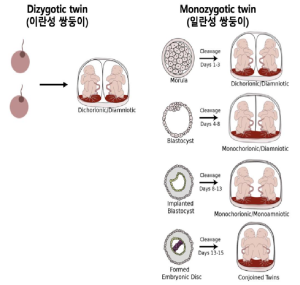
1. Dizygotic Twins (Fraternal Twins)
• Occur when two separate ova are fertilized by two different sperm.
• Each fetus has its own placenta and amniotic sac.
• Twins may be same sex or different sexes.
• Genetic similarity is like that of normal siblings.
2. Monozygotic Twins (Identical Twins)
• Occur when one fertilized ovum divides into two embryos.
• Twins have identical genetic material and are always same sex.
• They may share placenta and/or amniotic sac depending on when division occurs.
Risk Factors
• Family history of twins (especially maternal side)
• Advanced maternal age (over 35 years)
• Assisted reproductive technologies (e.g., IVF)
• Multiparity (women who have had several pregnancies)
• Ovulation-inducing drugs
Signs and Symptoms
• Uterus larger than expected for gestational age
• Excessive weight gain during pregnancy
• Severe nausea and vomiting
• Early fetal movements felt strongly
• On examination: more than one fetal heart sound
Diagnosis
• Ultrasound – confirms number of fetuses and placentas
• Doppler fetal heart monitoring – detects multiple heartbeats
• Measurement of uterine size greater than gestational age
Complications
Maternal Complications
• Anemia
• Pre-eclampsia
• Polyhydramnios
• Preterm labor
• Postpartum hemorrhage
Fetal Complications
• Prematurity
• Low birth weight
• Twin-to-twin transfusion syndrome (in identical twins sharing placenta)
• Malpresentation
• Perinatal mortality
Management
Antenatal Care
• Frequent prenatal visits
• Adequate nutrition and iron supplementation
• Regular ultrasound monitoring for fetal growth
• Rest and monitoring for preterm labor
During Delivery
• Mode of delivery depends on presentation of the first twin and maternal condition.
• Vaginal delivery possible if both twins are well positioned.
• Cesarean section if complications occur (e.g., malpresentation).
Postnatal Care
• Monitor mother for postpartum hemorrhage
• Special care for premature or low birth weight babies
Prevention
Most multiple pregnancies cannot be prevented, but careful use of fertility treatments can reduce the risk.
Women known for giving birth to multiple babies in history Until today 11th October 2026 | ||||||
No. | Mother | Country of birth / delivery | Year | Number of babies | Names or description | Children’s ages in 2026 |
1 | Elzire Dionne | Canada | 1934 | 5 — Quintuplets | Yvonne, Annette, Cécile, Émilie and Marie | They would have been 92; all have died. |
2 | Bobbi McCaughey | United States | 1997 | 7 — Septuplets | Four boys and three girls | 28; turning 29 in November 2026. |
3 | Nkem Chukwu | United States | 1998 | 8 — Octuplets | Six girls and two boys | Approximately 27–28; one died in infancy, while the other seven survived. |
4 | Nadya Suleman | United States | 2009 | 8 — Octuplets | Six boys and two girls | 17; turning 18 on 26 January 2027. |
5 | Halima Cissé | Mali; delivered in Morocco | 2021 | 9 — Nonuplets | Five girls and four boys | 5; turned five on 4 May 2026. |
6 | Geraldine Brodrick | Australia | 1971 | 9 — Nonuplets | Five boys and four girls | They would have been 55; none survived beyond six days. |
7 | Walton sextuplets: Hannah, Lucy, Ruth, Sarah, Kate and Jennifer | United Kingdom | 1983 | 42; turning 43 on 18 November 2026. |
|
|
8 | McCaughey septuplets | United States | 1997 | 28; turning 29 in November 2026. |
|
|
9 | Chukwu octuplets | United States | 1998 | 27; turning 28 in December 2026. |
|
|
10 | Suleman octuplets | United States | 2009 | 17 |
|
|
11 | Cissé nonuplets | Mali / Morocco | 2021 | 5 |
|
|
Source :Atwal, S. (2022, May 4).Guinness World Records.
4.1.1Multiple ovulation and fertilization
During a typical menstrual cycle, one egg is released from an ovary, although the process varies between women and cycles. Sometimes, two or more eggs are released during the same cycle. If separate sperm cells fertilize these eggs, multiple embryos may develop and implant in the uterus.
This process can result in fraternal twins (dizygotic twins), or potentially triplets and higher-order multiples if more eggs are released and successfully fertilized.
For example:
- Two eggs fertilized by two sperm cells may produce twins.
- Three eggs fertilized by three sperm cells may produce triplets.
- Six eggs fertilized by six sperm cells may potentially produce sextuplets.
These examples describe one possible mechanism, not a guarantee. Each embryo must develop successfully, and the pregnancy must continue for the babies to be born.
The children may be of the same sex or different sexes because each embryo develops from a separate egg and sperm. The American College of Obstetricians and Gynecologists (ACOG) describes this process as one of the principal causes of multiple pregnancy.
4.1.2. Splitting of a single fertilized eggs
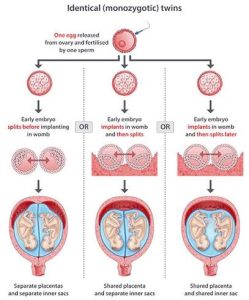
A second mechanism occurs when one egg is fertilized by one sperm, forming a zygote, and the early embryo subsequently divides into two or more embryos.
This can produce identical twins (monozygotic twins). In rare circumstances, further division can produce identical triplets or higher-order multiples.
Identical multiples generally share the same genetic origin and are usually the same biological sex. However, the timing of embryo division influences whether they share a placenta and the surrounding fetal membranes.
Can both mechanisms occur in the same pregnancy?
Yes. In principle, a pregnancy can involve multiple eggs being fertilized and one of the resulting embryos dividing. This can produce a mixture of identical and non-identical babies.
Therefore, the birth of six babies does not, by itself, establish how many eggs were released, how many embryos initially formed, or whether fertility treatment was used. Medical records and appropriate clinical assessments would be required to determine the actual mechanism in a particular case.
Factors that increase the probability of multiple pregnancy
Factor | Biological or medical explanation |
Family history | A maternal family tendency to release more than one egg can increase the likelihood of fraternal twins. |
Maternal age | Women over 35 are more likely, on average, to release multiple eggs in a cycle, although fertility declines with age overall. |
Previous pregnancies | Previous pregnancies may be associated with a higher likelihood of fraternal twinning in some populations. |
Ovulation-inducing medicines | Certain fertility medicines stimulate the ovaries to develop and release multiple eggs. |
In vitro fertilization (IVF) | Transferring more than one embryo can result in multiple pregnancy; occasionally, one embryo may also split. |
Natural variation | Multiple ovulation and embryo splitting can occur without fertility treatment or an obvious family history. |
These factors do not mean that every woman with one or more of them will conceive multiples. Identical twinning, in particular, is not usually explained by a simple inherited tendency.
Why is giving birth to six babies considered rare?
Sextuplets are six babies born from one pregnancy. Such births are uncommon because they require several embryos to develop simultaneously and the pregnancy to progress to delivery.
The reported Punjab case describes four boys and two girls. This combination is biologically possible. However, the babies’ sex distribution alone cannot establish whether the pregnancy occurred naturally or through fertility treatment.
The case also illustrates an important distinction between giving birth to six babies and all six babies surviving in good health. These are separate medical outcomes. Confirmation of survival and health requires reliable clinical information, particularly because sextuplets are at substantial risk of premature birth and low birth weight.
Without independently verified reporting or medical documentation, the specific details of the Punjab case should remain attributed to the social-media report rather than presented as independently established medical facts.
7. Medical risks associated with multiple pregnancy
Multiple pregnancy can be a joyful experience for families, but it requires careful clinical management.
Risk | Explanation |
Premature birth | Babies may be born before their organs are fully developed. |
Low birth weight | Each baby may weigh less than expected at birth. |
Preeclampsia | The mother has an increased risk of a pregnancy-related blood pressure disorder. |
Gestational diabetes | The mother has an increased risk of developing diabetes during pregnancy. |
Fetal growth restriction | One or more babies may not grow adequately. |
Delivery complications | Cesarean delivery and specialist neonatal care may be necessary. |
Postpartum hemorrhage | The mother may have a higher risk of heavy bleeding after delivery. |
The American College of Obstetricians and Gynecologists identifies preterm birth, preeclampsia, gestational diabetes, fetal growth problems, and other maternal and neonatal complications as important concerns in multifetal pregnancy. The risks generally increase in pregnancies involving three or more fetuses.
4.1.4. How can fertility treatment result in six babies?
Modern reproductive medicine can increase the likelihood of multiple pregnancy, particularly when treatment stimulates the ovaries to release several eggs.
- Ovulation induction
Fertility medicines stimulate the ovaries to develop one or more mature follicles, which may release eggs. When several eggs are released and fertilized, multiple pregnancy can occur. The risk depends on the medication and the ovarian response.
- In vitro fertilization (IVF)
In IVF, eggs are collected from the ovaries and fertilized with sperm in a laboratory. One or more embryos may then be transferred to the uterus. If more than one embryo implants, a multiple pregnancy may develop.
- Early pregnancy monitoring
Ultrasound examinations help healthcare professionals identify the number of fetuses, assess their development, and determine whether they share a placenta or fetal sac. This information guides subsequent pregnancy care.
ACOG emphasizes that fertility treatment can increase the likelihood of triplets and higher-order multiple pregnancies. Current clinical practice therefore aims to minimize avoidable multiple pregnancies, including by limiting the number of embryos transferred during IVF.
Important: Fertility medicines should never be used without qualified medical supervision to try to produce twins, triplets, or sextuplets. A higher number of fetuses does not necessarily mean a healthier outcome.
4.1.5.How does a woman’s body sustain several babies?
Once multiple embryos implant in the uterus, pregnancy depends on the development of several interconnected biological systems.
5.1. The placenta
Each fetus needs an adequate supply of oxygen and nutrients. Depending on how the pregnancy develops, babies may have separate placentas or share one.
5.2. Amniotic fluid and fetal membranes
Amniotic fluid cushions the developing babies and supports their movement. The number of amniotic sacs varies according to the type of multiple pregnancy.
5.3. Maternal physiological adaptation
The mother’s cardiovascular system, blood volume, metabolism, and nutritional requirements adapt during pregnancy. Carrying several fetuses places greater demands on these systems.
The uterus can accommodate more than one developing fetus, but its capacity is not unlimited. As the number of fetuses increases, the likelihood of premature delivery and other complications generally rises.
4.1.6.Why is giving birth to six babies considered rare?
Sextuplets are six babies born from one pregnancy. Such births are uncommon because they require several embryos to develop simultaneously and the pregnancy to progress to delivery.
The reported Punjab case describes four boys and two girls. This combination is biologically possible. However, the babies’ sex distribution alone cannot establish whether the pregnancy occurred naturally or through fertility treatment.
The case also illustrates an important distinction between giving birth to six babies and all six babies surviving in good health. These are separate medical outcomes. Confirmation of survival and health requires reliable clinical information, particularly because sextuplets are at substantial risk of premature birth and low birth weight.
Without independently verified reporting or medical documentation, the specific details of the Punjab case should remain attributed to the social-media report rather than presented as independently established medical facts.
4.2 Biological mechanisms of multiple pregnancy
There are two principal natural mechanisms of twinning: monozygotic twinning and dizygotic twinning.
4.2.1 Monozygotic twinning (identical twins)
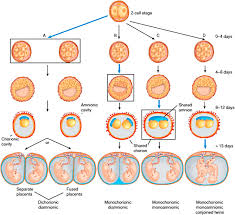
This occurs when one egg is fertilised by one sperm, forming a zygote that subsequently separates into two embryonic developmental units. The resulting twins usually have nearly identical genetic information and are usually of the same biological sex. The timing of embryo separation influences whether they have separate or shared placentas and amniotic sacs. Most cases occur without a clearly established cause.
4.2.2 Dizygotic twinning (fraternal twins)
This occurs when two eggs are released during one menstrual cycle and each is fertilised by a different sperm. The resulting embryos develop separately and are genetically comparable to ordinary siblings, sharing approximately 50% of their segregating genetic variants on average. They may be of the same or different biological sexes. This mechanism can also contribute to triplet or higher-order pregnancies when more than two eggs are fertilised.
4.3 How triplets and higher-order pregnancies develop
Triplets or higher-order multiples can develop through several combinations of reproductive events:
- Three separate eggs are fertilised, producing three genetically distinct embryos.
- Two eggs are fertilised, but one resulting embryo divides, producing three embryos.
- A single fertilised egg divides more than once, producing multiple genetically closely related embryos; this is rare.
The same principle applies to higher-order multiples: the number of developing embryos depends on how many eggs are fertilised and whether one or more embryos subsequently divide. Not every embryo, however, implants successfully or continues developing throughout pregnancy.
4.4 The role of fertilisation and implantation
Fertilisation usually occurs when a sperm cell penetrates an egg, commonly in the fallopian tube. The fertilised egg begins dividing as it moves towards the uterus. It then develops into an embryo that may implant into the uterine lining.
In a multiple pregnancy, two or more embryos may implant and develop, or an embryo may divide into separate embryonic structures. Successful continuation depends on embryonic development, implantation, placental function and the maternal environment.
The uterus does not ordinarily produce several babies simply because it is large enough to accommodate them. Multiple pregnancy requires the development of more than one embryo, or the division of an early embryo into more than one embryonic unit.
5. Findings and discussion according to the specific objectives
5.1 Objective one: To explain the biological and embryological mechanisms of multiple pregnancy
The reviewed evidence identifies two principal biological pathways: the fertilisation of multiple eggs and the division of a single fertilised egg.
First, multiple ovulation occurs when the ovaries release more than one egg in the same menstrual cycle. If separate sperm cells fertilise the eggs and the embryos implant successfully, a dizygotic multiple pregnancy may result.
Second, embryonic division occurs when a single fertilised egg separates into two or more embryonic units. This produces monozygotic twins or, rarely, higher-order multiples.
Third, placental development determines important aspects of fetal support and clinical risk. Some identical twins have separate placentas, while others share a placenta. When a placenta is shared, connections between fetal blood vessels can create complications, including twin-to-twin transfusion syndrome.
The NHS identifies chorionicity—the number of placentas—and amnionicity—the number of amniotic sacs—as important features in the assessment and management of multiple pregnancies.
These findings demonstrate that multiple pregnancy is not a single biological event. It results from different pathways involving ovulation, fertilisation, embryonic development and implantation.
5.2 Objective two: To examine genetic, hormonal, demographic and reproductive factors associated with multiple pregnancy
The literature identifies several factors associated with the probability of conceiving twins or higher-order multiples.
Factor | Biological or reproductive explanation | Association with multiple pregnancy |
Family history | Inherited predisposition to releasing multiple eggs may occur in some families. | More relevant to fraternal twinning. |
Maternal age | Changes in ovarian function and reproductive hormone patterns can influence multiple ovulation. | Fraternal twinning becomes more likely in some older reproductive-age groups, although overall pregnancy risks also rise with age. |
Previous pregnancies | Parity and reproductive history may be associated with the probability of fraternal twinning. | An association, not a guarantee. |
Ovulation-induction medicines | Medicines stimulate the development or release of eggs from the ovaries. | Can increase the likelihood of twins, triplets or more. |
In vitro fertilisation (IVF) | More than one embryo may be transferred, and embryo splitting can also occur. | Multiple pregnancy risk depends partly on treatment protocol and the number of embryos transferred. |
Natural embryonic division | A single fertilised egg separates into multiple embryonic units. | Produces identical multiples; most cases have no established genetic cause. |
Source: Synthesis of ACOG and MedlinePlus Genetics guidance.
5.2.1 Genetic influences
Genetic predisposition is particularly relevant to dizygotic twinning. Some women inherit a tendency towards hyperovulation, which means releasing more than one egg in a menstrual cycle. This helps explain why fraternal twins may occur more frequently in some families.
However, there is no single, universally established “twin gene” that explains all multiple pregnancies. The genetic basis of hyperregulation is complex, and the contribution of specific genes remains an active area of research. Monozygotic twinning is generally not strongly associated with inherited genetic factors.
5.2.2 Hormonal influences
Reproductive hormones regulate follicular development, ovulation and the menstrual cycle. Follicle-stimulating hormone (FSH), luteinising hormone (LH), oestrogen and progesterone have different roles in these processes.
In some circumstances, more than one ovarian follicle matures and releases an egg. Fertility medicines can deliberately stimulate follicular development, increasing the possibility that multiple eggs will be available for fertilisation. The precise hormonal explanation for naturally occurring hyperovulation varies between individuals.
5.2.3 Maternal age and reproductive history
Maternal age is associated with differences in the likelihood of naturally occurring dizygotic twinning. Older maternal age at conception has contributed to changes in multiple-birth patterns in some populations. Nevertheless, age does not guarantee multiple pregnancy, and pregnancy at older ages may carry additional medical risks.
5.2.4 Assisted reproductive technologies
Assisted reproductive technologies have made it possible for some people experiencing infertility to conceive. However, certain fertility treatments increase the risk of multiple pregnancy.
Ovulation-induction medicines may stimulate the release of several eggs. During IVF, transferring more than one embryo may result in more than one implantation. Even after single-embryo transfer, identical twinning can occasionally occur.
ACOG recommends approaches that reduce avoidable multiple gestations, including appropriate monitoring during ovarian stimulation and limiting embryo transfer according to professional guidance.
The findings suggest that multiple pregnancy results from an interaction between reproductive biology, inherited predisposition, maternal characteristics and medical intervention. No single factor explains every case.
5.3 Objective three: To assess maternal and neonatal health implications, prevention strategies and medical management
Multiple pregnancy is associated with increased medical demands because the mother’s body must support more than one developing fetus. The magnitude of risk depends on the number of fetuses, placental arrangement, gestational age, maternal health and access to appropriate obstetric care.
5.3.1 Maternal health risks
The principal maternal complications include:
- Anaemia: Increased nutritional demands can contribute to iron deficiency.
- Hypertensive disorders: Multiple pregnancy is associated with increased risks of gestational hypertension and pre-eclampsia.
- Gestational diabetes: The risk is increased in multifetal gestations.
- Preterm labour: Uterine distension and other pregnancy-related mechanisms can contribute to earlier delivery.
- Postpartum haemorrhage: The enlarged uterus may contract less effectively after delivery, increasing the risk of excessive bleeding.
These risks do not mean that every woman carrying twins or triplets will experience complications. Rather, they indicate the need for individual risk assessment and appropriate antenatal care.
5.3.2 Fetal and neonatal health risks
Preterm birth
Babies from multiple pregnancies are more likely to be born before 37 completed weeks of gestation. Prematurity can increase the risk of respiratory difficulties, feeding problems, infection and other neonatal complications. The risk generally increases in higher-order pregnancies.
Low birth weight and unequal growth
Babies may have lower birth weights because they are born early or experience restricted growth. In pregnancies where twins share a placenta, unequal placental blood supply may cause one fetus to grow differently from the other.
Placental and fetal complications
Some identical twins share a placenta, creating a risk of twin-to-twin transfusion syndrome. This condition results from unbalanced blood flow through connecting placental vessels and requires specialist assessment.
5.3.3 Medical management of multiple pregnancy
Appropriate management aims to identify complications early, support fetal growth and prepare for safe delivery.
Medical intervention | Purpose | Expected benefit |
Early ultrasound examination | Confirm the number of fetuses and assess placental and amniotic-sac arrangements. | Early identification of the type of multiple pregnancy. |
Regular antenatal appointments | Monitor maternal health and fetal development. | Earlier detection of complications. |
Serial ultrasound monitoring | Assess fetal growth, amniotic fluid and placental-related complications. | Identification of growth problems and selected fetal complications. |
Maternal nutritional assessment | Evaluate dietary needs and assess for anaemia and other deficiencies. | Support maternal health and fetal development. |
Specialist obstetric care | Plan management according to pregnancy type and individual risk. | Improved coordination of care and delivery planning. |
Neonatal preparedness | Prepare for the possibility of premature or medically vulnerable newborns. | Timely newborn assessment and treatment. |
Source: Synthesis of ACOG and NHS clinical guidance.
The timing and frequency of scans, consultations and delivery should be determined by qualified healthcare professionals according to the pregnancy’s specific characteristics. A universal delivery date is not appropriate for every twin or triplet pregnancy.
5.3.4 Preventing avoidable multiple pregnancies
Not all multiple pregnancies can be prevented, particularly naturally occurring identical twinning. However, healthcare professionals can reduce avoidable treatment-related multiple pregnancies.
Important measures include:
- Monitoring ovarian stimulation carefully during fertility treatment.
- Adjusting or cancelling treatment cycles when the number of developing follicles creates an unacceptable risk, in accordance with clinical guidance.
- Considering single-embryo transfer during IVF when clinically appropriate.
- Providing informed counselling about the benefits, risks and alternatives of fertility treatment.
- Ensuring early pregnancy assessment and referral to specialist obstetric services when indicated.
These measures aim to reduce preventable complications without suggesting that a naturally occurring multiple pregnancy is itself a medical error or that all multiple pregnancies have poor outcomes.
6. Integrated discussion of the findings
The three research objectives demonstrate that multiple pregnancy is best understood through an integrated reproductive-health framework.
First, biological processes determine how multiple embryos arise. Multiple ovulation can lead to fraternal twins or higher-order multiples, while embryonic division can produce identical twins and, rarely, higher-order identical multiples.
Second, genetic, hormonal and demographic factors influence the likelihood of certain reproductive events. Family history is particularly relevant to fraternal twinning, while fertility treatments can increase the number of eggs available for fertilisation or the number of embryos transferred.
Third, medical outcomes depend not only on the number of fetuses but also on the way the pregnancy develops. Placental sharing, fetal growth, gestational age and maternal health all influence the need for monitoring and specialist intervention.
The evidence also highlights an important distinction: the biological possibility of conceiving several babies is not the same as the medical ability to carry the pregnancy safely to delivery. Multiple pregnancy requires appropriate antenatal assessment because its risks can affect both the mother and the developing babies.
From a public-health perspective, improving access to early ultrasound, antenatal services, trained obstetric personnel and neonatal care is important, particularly in settings where specialist services may be limited. Future research in Rwanda could examine local multiple-birth patterns, maternal outcomes, neonatal outcomes and access to specialised care using hospital records and national health data.
7. Conclusion
This article examined the biological, genetic and medical mechanisms that enable a woman to give birth to more than one baby during a single pregnancy. Based on secondary data, the analysis established that multiple pregnancy primarily results from two natural mechanisms: the fertilisation of multiple eggs and the division of a single fertilised egg into multiple embryos. Assisted reproductive technologies can also increase the likelihood of multiple gestation.
The first specific objective showed that ovulation, fertilisation, embryonic division and placental development are central to understanding multiple pregnancy. The second established that genetic predisposition, hormonal influences, maternal age, reproductive history and fertility treatment may influence its occurrence. The third demonstrated that multiple pregnancy is associated with increased maternal and neonatal risks, particularly preterm birth, low birth weight, hypertensive disorders and certain placental complications.
The study concludes that multiple pregnancy is a complex reproductive phenomenon requiring evidence-based medical management. Early diagnosis, regular antenatal monitoring, specialist obstetric care and responsible fertility-treatment practices can help reduce preventable risks and improve outcomes.
Ultimately, understanding multiple pregnancy requires both biological knowledge and a commitment to maternal and newborn health. The objective is not merely to understand how several babies can develop in one pregnancy, but also to ensure that mothers and their babies receive the care necessary for the safest possible outcomes.
8. Recommendations
Based on the findings, the article recommends the following:
- Healthcare providers: Promote early ultrasound assessment and appropriate monitoring of all multiple pregnancies.
- Fertility specialists: Use evidence-based treatment protocols that minimise avoidable higher-order multiple gestations.
- Health policymakers: Strengthen access to antenatal care, obstetric referral services and neonatal facilities.
- Researchers: Conduct population-based studies to establish the prevalence, determinants and outcomes of multiple pregnancy in Rwanda.
- Pregnant women and families: Seek professional medical advice early and attend recommended antenatal appointments.
9. References
- American College of Obstetricians and Gynecologists (ACOG). (n.d.). Multiple Pregnancy. Read the clinical information.
- American College of Obstetricians and Gynecologists (ACOG). (2021). Multifetal Gestations: Twin, Triplet, and Higher-Order Multifetal Pregnancies. Practice Bulletin No. 231. Read the practice bulletin.
- American College of Obstetricians and Gynecologists (ACOG). (2016). Perinatal Risks Associated With Assisted Reproductive Technology. Read the clinical guidance.
- American College of Obstetricians and Gynecologists (ACOG). (n.d.). Treating Infertility. Read the patient guidance.
- MedlinePlus Genetics. (n.d.). Is the Probability of Having Twins Determined by Genetics? U.S. National Library of Medicine. Read the genetics overview.
- MedlinePlus. (n.d.). Twins, Triplets, Multiple Births. U.S. National Library of Medicine. Read the medical overview.
- National Health Service (NHS). (n.d.). Antenatal Care with Twins. Read the antenatal care guidance.
- American College of Obstetricians and Gynecologists (ACOG). (2017). Multifetal Pregnancy Reduction. Committee Opinion No. 719. Read the ethics and clinical guidance.