Date: 1 November 2026
All Saints’ Day
Dr. Havugimana Alexis
Abstract
All Saints’ Day, celebrated annually on 1 November by many Christian traditions, provides an opportunity to reflect on holiness, faith, sacrifice, moral responsibility and the enduring influence of individuals whose lives represent exemplary spiritual and ethical values. Beyond its religious significance, the celebration raises important philosophical and sociological questions concerning human goodness, moral leadership, collective memory, social responsibility and the legacy individuals leave behind.
This article examines the historical development, theological meaning and contemporary social relevance of All Saints’ Day. It explores how the lives of saints, both formally recognised and unknown, can provide lessons for contemporary societies facing moral challenges, social inequalities, individualism, conflicts and declining ethical responsibility.
The study adopts a qualitative, documentary research approach based on secondary data, historical literature, theological publications, biblical texts and newspaper reporting. A proposed documentary corpus of 50 newspaper articles is used as the basis for a systematic content-analysis framework. The analysis considers five themes: faith and spirituality, sacrifice and service, moral responsibility, remembrance and intergenerational influence.
The discussion suggests that holiness should not be understood exclusively as a religious title or an extraordinary spiritual achievement. It can also be examined through the everyday practice of compassion, honesty, forgiveness, justice, humility and service to humanity. The article argues that the significance of All Saints’ Day extends beyond remembering exemplary individuals: it challenges living generations to translate moral and spiritual values into meaningful actions.
Keywords: All Saints’ Day, holiness, faith, saints, morality, spirituality, social responsibility, remembrance, human dignity, ethics.
1. Introduction
Every society remembers individuals who have contributed positively to human existence. Some are remembered because of their courage, others because of their sacrifice, compassion, wisdom, leadership or commitment to justice. However, the deeper question is not simply why people are remembered after death, but what makes their lives worthy of remembrance.
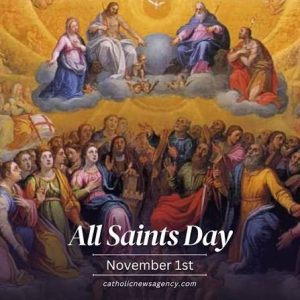
On 1 November 2026, Christians in many parts of the world celebrate All Saints’ Day, a solemn occasion dedicated to honouring all saints, including those whose names are publicly recognised and those whose contributions may never have been recorded in history.
The celebration invites humanity to reconsider the meaning of holiness. Is holiness exclusively a religious condition? Is it demonstrated through extraordinary miracles, or can it also be reflected in ordinary acts of kindness, forgiveness, integrity and service?
According to the Catholic Church’s understanding, the communion of saints represents the spiritual unity of believers in Christ and the sharing of spiritual goods among members of the Church (Catechism of the Catholic Church, 1992, paras. 946–948). This understanding places the celebration within a wider theological framework of faith, community and spiritual belonging.
The philosophical significance of the celebration extends further. Aristotle (2009) argues that human flourishing is associated with the cultivation and practice of virtue. Similarly, virtue ethics encourages individuals to develop good character through repeated moral actions rather than relying exclusively on declarations of good intentions.
From a sociological perspective, collective remembrance contributes to the preservation of social values, identities and cultural continuity. Durkheim (1995) demonstrates how collective rituals strengthen social solidarity and reinforce shared beliefs.
Therefore, All Saints’ Day can be examined as both a religious celebration and an opportunity for ethical reflection.
This article advances one central argument: the greatest tribute to exemplary lives is not merely to remember their names, but to practise the values that made their lives meaningful.
2. Background of All Saints’ Day
2.1 Historical development
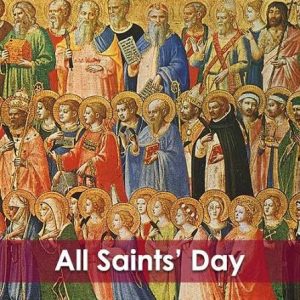
The historical development of All Saints’ Day is associated with early Christian traditions of remembering martyrs and other individuals recognised for their commitment to the Christian faith.
During the early centuries of Christianity, communities commemorated martyrs, particularly those who died during periods of persecution. As the number of recognised martyrs increased, individual commemorations became difficult to maintain, creating the need for collective remembrance.
Historical accounts identify early celebrations honouring groups of martyrs in the Eastern Christian tradition. In the Western Church, the dedication of the Pantheon in Rome under Pope Boniface IV in 609 or 610 became an important stage in the development of collective commemoration. Pope Gregory III (731–741) subsequently dedicated a chapel in St Peter’s Basilica to all saints, and the celebration became associated with 1 November. Pope Gregory IV (827–844) helped extend the observance throughout the Western Church (Catholic Encyclopedia, n.d.; Vatican News, n.d.).
The historical development demonstrates that All Saints’ Day emerged from the desire to honour individuals whose faith and commitment represented important examples for Christian communities.
2.2 Religious meaning
All Saints’ Day celebrates saints known to the Church and those whose holiness may remain unknown to the wider world.
The celebration recognises that exemplary spiritual lives are not necessarily associated with public recognition, wealth, political authority or social status.
The biblical passage in Revelation 7:9–10 presents a vision of a great multitude from different nations, peoples and languages standing before God. This image offers an important theological foundation for reflecting on the universality of faith and the diversity of those who belong to God’s people.
Matthew 5:1–12, commonly known as the Beatitudes, also provides a moral framework for understanding holiness through humility, mercy, righteousness, peacemaking and purity of heart.
2.3 Distinction between All Saints’ Day and All Souls’ Day

An important distinction must be made between All Saints’ Day, celebrated on 1 November, and All Souls’ Day, observed on 2 November in the Western Catholic tradition.
All Saints’ Day honours all saints, recognised and unrecognised, while All Souls’ Day focuses on remembering and praying for the faithful departed.
Although the celebrations are distinct, cultural practices sometimes bring them together. In countries such as the Philippines, families visit cemeteries, offer flowers, light candles, pray and share memories of deceased relatives during the Undas period (Le Monde, 2025; Associated Press, 2026).
This distinction is important because remembering the dead and celebrating the saints are related practices, but they do not have exactly the same theological meaning.
3. Problem Statement

Contemporary societies increasingly experience moral and social challenges associated with dishonesty, corruption, intolerance, violence, selfishness, discrimination and declining concern for the well-being of others.
Although religious celebrations remain important in many communities, there is a concern that some celebrations are becoming more focused on ceremonies, traditions and outward expressions than on the practical application of the values they represent.
All Saints’ Day provides an opportunity to address this concern by examining the relationship between religious remembrance and everyday moral conduct.
Another challenge is the tendency to associate holiness exclusively with formally recognised religious personalities, overlooking ordinary individuals whose lives demonstrate compassion, sacrifice, honesty, forgiveness and commitment to humanity.
There is therefore a need to explore how the historical, theological and ethical significance of All Saints’ Day can contribute to contemporary discussions about moral development, responsible citizenship and human dignity.
The central research problem is:
To what extent can the values associated with All Saints’ Day contribute to the development of moral responsibility, social solidarity and ethical behaviour in contemporary society?
4. Research Objectives
4.1 General objective
To examine the historical, theological, philosophical and sociological significance of All Saints’ Day and its contribution to moral development and social responsibility in contemporary society.
4.2 Specific objectives
1. To examine the historical origins and theological foundations of All Saints’ Day within Christian traditions.
2. To analyse the moral, philosophical and sociological values represented by the lives and teachings of saints.
3. To assess the contemporary relevance of All Saints’ Day in promoting compassion, ethical responsibility, social solidarity and positive human behaviour.
5. Literature Review
5.1 Theological perspectives on holiness

Christian theology understands holiness as a central dimension of the relationship between humanity and God.
The biblical instruction in 1 Peter 1:15–16 calls believers to pursue holiness in their conduct. This suggests that holiness should not remain an abstract religious concept but should influence daily behaviour.
The Catechism of the Catholic Church (1992) explains the communion of saints as a relationship involving holy persons and holy things. This theological understanding highlights the spiritual unity of the Christian community (paras. 946–948).
Pope Francis (2018), in Gaudete et Exsultate, emphasises the universal call to holiness and the importance of recognising holiness in everyday life. This perspective is particularly relevant because it moves the discussion beyond extraordinary religious achievements and considers the moral significance of ordinary human experiences.
5.2 Philosophical perspectives on virtue
Aristotle’s Nicomachean Ethics (2009) provides a foundation for understanding moral excellence through virtue.
According to Aristotle, virtues develop through practice and habituation. An individual becomes just by performing just actions, courageous by practising courage and generous through generosity.
This philosophical perspective provides an important connection with All Saints’ Day. The lives of exemplary individuals can be interpreted as demonstrations of virtues cultivated through consistent decisions and actions.
Kant (2012) offers another important perspective through his emphasis on duty, moral principles and the categorical imperative. For Kant, moral actions should not depend exclusively on personal benefits or external rewards.
Consequently, the ethical significance of holiness can be examined through the willingness to do what is morally right, even when doing so involves sacrifice.
5.3 Sociological perspectives on collective remembrance
Durkheim (1995) argues that religious rituals contribute to collective solidarity by reinforcing shared values and social identity.
From this perspective, All Saints’ Day is not only an individual spiritual experience but also a collective event through which communities renew their commitment to shared moral and religious ideals.
Halbwachs (1992) further demonstrates that collective memory is socially constructed and maintained through relationships, institutions and cultural practices.
This provides an explanation of why communities preserve stories about individuals who demonstrated courage, sacrifice, justice and compassion.
5.4 Saints, role models and social learning
Bandura (1977) explains that human beings acquire behaviour through observation, imitation and social interaction.
The lives of saints can therefore be understood as moral examples through which individuals learn desirable forms of behaviour.
When younger generations encounter stories of individuals who demonstrated honesty, courage, forgiveness and compassion, they are exposed to behavioural examples that can influence their moral development.
However, moral learning requires more than admiration. It requires the translation of observed values into everyday practice.
5.5 Contemporary media and religious remembrance
Newspapers and other media contribute to the public interpretation of religious celebrations by reporting ceremonies, personal experiences, cultural practices and statements from religious and political leaders.
For example, Associated Press reporting on the 2026 Undas observance in Manila describes how families visit cemeteries, share food, pray and transmit remembrance traditions to younger generations (Associated Press, 2026).
Similarly, Le Monde (2025) discusses the distinction between All Saints’ Day and All Souls’ Day, demonstrating the importance of accurate religious and historical interpretation.
These reports illustrate the contribution of journalism to understanding how religious traditions are interpreted and practised across different societies.
6. Research Methodology
6.1 Research design
The study adopts a qualitative documentary research design. This approach is appropriate because the research focuses on historical developments, religious beliefs, philosophical interpretations, cultural practices and social meanings associated with All Saints’ Day.
The study relies on secondary data rather than primary interviews, questionnaires or experimental investigations.
The documentary approach enables the researcher to compare information from different sources and identify recurring themes relating to holiness, spirituality, morality, social solidarity and collective remembrance.
6.2 Sources of secondary data
The proposed documentary database consists of 50 newspaper articles and reports published by national and international media organisations.
The newspaper material is intended to cover:
-
Historical reporting about All Saints’ Day.
-
Religious explanations and theological interpretations.
-
Cultural celebrations and remembrance practices.
-
Statements from religious leaders.
-
Social and community activities associated with the celebration.
-
Moral lessons and contemporary reflections on holiness.
-
Differences between All Saints’ Day and All Souls’ Day.
Additional secondary sources include academic books, peer-reviewed publications, biblical texts, church documents and historical references.
6.3 Sampling procedure
The study proposes purposive sampling to select 50 relevant newspaper articles.
The articles should be selected according to the following criteria:
-
Direct relevance to All Saints’ Day or the wider observance of saints.
-
Publication by an identifiable newspaper or established news organisation.
-
Availability of sufficient information for thematic analysis.
-
Relevance to at least one of the research objectives.
-
Diversity of geographical and cultural perspectives.
-
Avoidance of duplicate reports.
The proposed sample should include reporting from different geographical regions, including Africa, Europe, Asia and the Americas.
Methodological clarification: The 50-article sample is the specified research design, not a claim that 50 individual newspaper articles have already been retrieved and coded. The findings below are therefore a qualitative documentary synthesis of the accessible literature and illustrative media reports, not statistical results from a completed 50-article dataset.
6.4 Data analysis
The study uses thematic content analysis.
The analysis follows five principal stages:
-
Identification of relevant documentary sources.
-
Classification of information according to research objectives.
-
Identification of recurring themes and patterns.
-
Comparison of theological, philosophical and sociological interpretations.
-
Interpretation of findings in relation to contemporary society.
The following thematic framework guides the analysis:
| Theme | Analytical focus |
| Faith and spirituality | Religious commitment and relationship with God |
| Moral excellence | Honesty, humility, justice and integrity |
| Sacrifice and service | Compassion and service to humanity |
| Collective remembrance | Cultural identity and social solidarity |
| Contemporary relevance | Moral responsibility and positive social change |
6.5 Reliability and validity
The credibility of the study is strengthened through source triangulation. Historical information is compared with church documents, academic literature, biblical references and independent media reports.
Particular attention is given to distinguishing historical evidence from theological interpretation and philosophical argument.
The study does not assume that all Christian denominations interpret the veneration of saints in the same way. Differences in religious traditions are acknowledged throughout the analysis.
6.6 Ethical considerations
The study uses publicly available secondary information and recognises the intellectual contributions of authors, religious institutions and journalists through appropriate referencing.
It also seeks to respect religious diversity and avoid presenting one denomination’s theological position as universally accepted by all Christians.
7. Discussion and Findings
7.1 All Saints’ Day represents the universality of exemplary human lives
The first major finding from the documentary synthesis is that All Saints’ Day represents the recognition of exemplary lives beyond the boundaries of fame and public recognition.
Historically, the celebration developed from collective remembrance of Christian martyrs and later expanded to honour all saints (Vatican News, n.d.).
This development carries an important message: human value cannot be measured exclusively through public visibility.
Some individuals make extraordinary contributions without receiving awards, public recognition or historical attention.
A parent who sacrifices personal comfort to educate children, a teacher who dedicates a lifetime to educating disadvantaged learners, a health worker who serves vulnerable communities and an individual who protects others during difficult circumstances may demonstrate qualities associated with moral excellence.
From a philosophical perspective, this interpretation is consistent with Aristotle’s understanding of virtue as a quality demonstrated through consistent actions rather than mere declarations (Aristotle, 2009).
Therefore, the celebration invites society to reconsider the people whose lives deserve recognition.
7.2 Holiness is reflected in everyday moral conduct
The second finding concerns the relationship between holiness and everyday behaviour.
Religious identity alone does not necessarily demonstrate moral excellence. A person may participate in religious ceremonies while behaving dishonestly or treating others unfairly.
The Beatitudes in Matthew 5:1–12 provide an ethical framework that emphasises mercy, humility, righteousness and peacemaking.
Similarly, Kant’s (2012) moral philosophy places importance on the principles governing human actions.
This suggests that the practical expression of faith should be evaluated through behaviour.
For example:
-
Honesty when dishonesty could provide personal benefits.
-
Forgiveness when revenge appears easier.
-
Compassion when another person’s suffering is inconvenient.
-
Justice when defending the vulnerable involves personal sacrifice.
-
Humility when one has authority or influence.
The important finding is that moral excellence becomes meaningful when values are consistently translated into action.
7.3 Remembrance strengthens social and cultural identity
The third finding concerns the relationship between remembrance and collective identity.
Religious and cultural commemorations provide opportunities for communities to preserve their history and transmit important values to younger generations.
Durkheim (1995) explains that collective rituals reinforce social belonging and shared beliefs.
The 2026 Associated Press report on Filipino families observing Undas illustrates this dimension. Families visited cemeteries, offered flowers and candles, prayed and shared memories of deceased relatives. The report also describes the passing of remembrance traditions to children (Associated Press, 2026).
This example demonstrates that remembrance is not simply an individual activity. It can strengthen family relationships and intergenerational continuity.
However, remembrance becomes more meaningful when it encourages living individuals to practise the positive values associated with those they honour.
7.4 The distinction between religious remembrance and the celebration of saints is important
The fourth finding concerns the need for accurate religious understanding.
There is a tendency in some cultural settings to combine All Saints’ Day and All Souls’ Day into one general remembrance of the dead.
However, the two celebrations have distinct theological meanings.
All Saints’ Day honours the saints, while All Souls’ Day focuses on the faithful departed.
Le Monde (2025) highlights the frequent confusion between these two observances and explains their different purposes.
This distinction demonstrates the importance of religious education.
Understanding the meaning of a celebration enables individuals to participate more thoughtfully rather than simply following cultural practices without understanding their significance.
7.5 Holiness should inspire social responsibility
The fifth finding is that holiness has implications for social development.
The lives of individuals recognised for compassion, justice, service and sacrifice provide an opportunity to examine the moral responsibilities of contemporary citizens.
A society cannot achieve sustainable development through economic growth alone. It also requires ethical leadership, institutional accountability, social trust and respect for human dignity.
The United Nations Sustainable Development Goals provide a broader development framework that includes quality education, reduced inequalities, peace, justice and strong institutions (United Nations, 2015).
Although the Sustainable Development Goals are not religious teachings, their emphasis on human well-being and social responsibility creates an important area of ethical convergence with values commonly associated with exemplary Christian lives.
For this reason, All Saints’ Day can inspire practical contributions to education, poverty reduction, community service, peaceful coexistence and social justice.
7.6 The celebration challenges contemporary individualism
Another important discussion concerns the growing emphasis on personal achievement, wealth, recognition and social status.
Modern societies frequently measure success through material possessions, professional positions and public visibility.
However, the lives of many religious exemplars encourage a different understanding of success: the value of a human life is also reflected in what an individual contributes to others.
Bandura’s (1977) social learning theory helps explain how positive examples influence behaviour. Individuals can learn compassion and responsibility by observing people who consistently practise these values.
The celebration therefore provides an opportunity to challenge the assumption that a successful life is necessarily a wealthy or famous life.
7.7 Holiness and the legacy of human dignity
The final finding concerns the relationship between holiness and human dignity.
Human dignity should not depend on wealth, educational qualifications, social status, nationality, age or public recognition.
An ethical society recognises the intrinsic worth of every human being and seeks to protect those who are vulnerable.
The celebration of saints provides a reminder that moral greatness is often demonstrated through the treatment of people who cannot offer anything in return.
This is particularly important in contemporary societies affected by discrimination, poverty, violence and social exclusion.
The central message is that holiness should not be measured only by the recognition someone receives, but also by the dignity, hope and goodness that person brings into the lives of others.
8. Overall Synthesis of Findings
| Research theme | Main finding | Contemporary implication |
| Historical significance | Collective remembrance has deep Christian roots | Preserve religious history |
| Spirituality | Holiness is a central Christian ideal | Strengthen spiritual reflection |
| Moral philosophy | Virtue requires consistent practice | Promote integrity |
| Sociology | Collective rituals strengthen belonging | Support community solidarity |
| Education | Role models influence behaviour | Teach ethical responsibility |
| Human development | Service and dignity contribute to social well-being | Promote inclusive development |
The documentary synthesis identifies six interconnected conclusions.
These themes suggest that All Saints’ Day has significance beyond its liturgical observance. It provides an opportunity to reflect on the relationship between belief, character, social responsibility and the legacy of human actions.
9. Conclusion
All Saints’ Day, celebrated on 1 November, is an important Christian occasion that honours saints known and unknown. Its historical development reflects the Christian tradition of remembering individuals whose lives demonstrated exceptional faith, sacrifice and commitment.
This article has examined the celebration from theological, philosophical, sociological and developmental perspectives.
The literature demonstrates that holiness can be understood through spiritual commitment and the consistent practice of moral virtues. Aristotle’s virtue ethics, Kant’s moral philosophy, Durkheim’s understanding of collective rituals and Bandura’s social learning theory provide complementary perspectives for examining the significance of exemplary human behaviour.
The documentary synthesis also demonstrates the importance of remembrance in preserving cultural identity, strengthening family relationships and transmitting values across generations.
However, the celebration should not become merely an annual religious ceremony. Its deeper significance lies in the opportunity it provides for personal examination and moral transformation.
Remembering the saints should encourage individuals to become more compassionate, honest, humble, forgiving and responsible.
Ultimately, humanity does not need only people who speak about goodness; it needs people who practise it.
Holiness is not simply about being remembered as a good person after death. It is about making a positive difference while one is alive.
All Saints’ Day therefore presents a question to every individual:
If your life were remembered through the actions you perform today, what kind of legacy would you leave behind?
10. Recommendations
Based on the documentary synthesis, the following recommendations are proposed.
10.1 Recommendations to religious institutions
1. Strengthen religious education: Churches should explain the historical and theological meaning of All Saints’ Day and distinguish it from All Souls’ Day.
2. Promote practical holiness: Religious teaching should emphasise honesty, forgiveness, compassion, justice and service rather than focusing exclusively on ceremonial participation.
3. Encourage community service: Churches should organise activities that support vulnerable families, disadvantaged children, elderly people and individuals experiencing social exclusion.
4. Promote interfaith understanding: Religious institutions should encourage respectful dialogue and peaceful coexistence among different religious traditions.
10.2 Recommendations to families
-
Parents should use the occasion to teach children about positive moral examples.
-
Families should preserve stories of individuals who demonstrated courage, kindness and responsibility.
-
Family remembrance should encourage reconciliation, forgiveness and stronger relationships.
-
Parents should demonstrate moral values through their own daily behaviour.
10.3 Recommendations to educational institutions
-
Schools and universities should integrate moral philosophy, ethics and responsible citizenship into educational programmes.
-
Teachers should encourage students to study exemplary individuals from different historical and cultural backgrounds.
-
Educational institutions should promote volunteerism, community engagement and social responsibility.
-
Students should be encouraged to evaluate their achievements not only through academic performance but also through their contributions to society.
10.4 Recommendations to governments and civil society
-
Promote ethical leadership, accountability and institutional integrity.
-
Recognise individuals making meaningful contributions to communities, particularly those working without public recognition.
-
Strengthen social protection and support systems for vulnerable populations.
-
Encourage programmes promoting peace, justice, tolerance and human dignity.
10.5 Recommendations for future research
Future researchers should undertake comparative studies of All Saints’ Day celebrations across different countries and Christian denominations.
Further research could also investigate:
-
The relationship between religious participation and ethical behaviour.
-
The influence of religious role models on young people’s moral development.
-
The relationship between collective remembrance and family cohesion.
-
The contribution of religious institutions to community development.
-
Differences in the interpretation of holiness across Christian traditions.
A subsequent empirical study should complete the proposed 50-newspaper-article corpus, document the publication details and apply a transparent coding framework to establish measurable thematic patterns.
11. Quote’s Dr. Havugimana Alexis
1. Holiness is not the absence of human weakness; it is the continuous decision to allow goodness to become stronger than our weaknesses.Dr. Havugimana Alexis
2. A person does not become extraordinary because the world knows their name, but because their actions give meaning to the lives of others.Dr. Havugimana Alexis
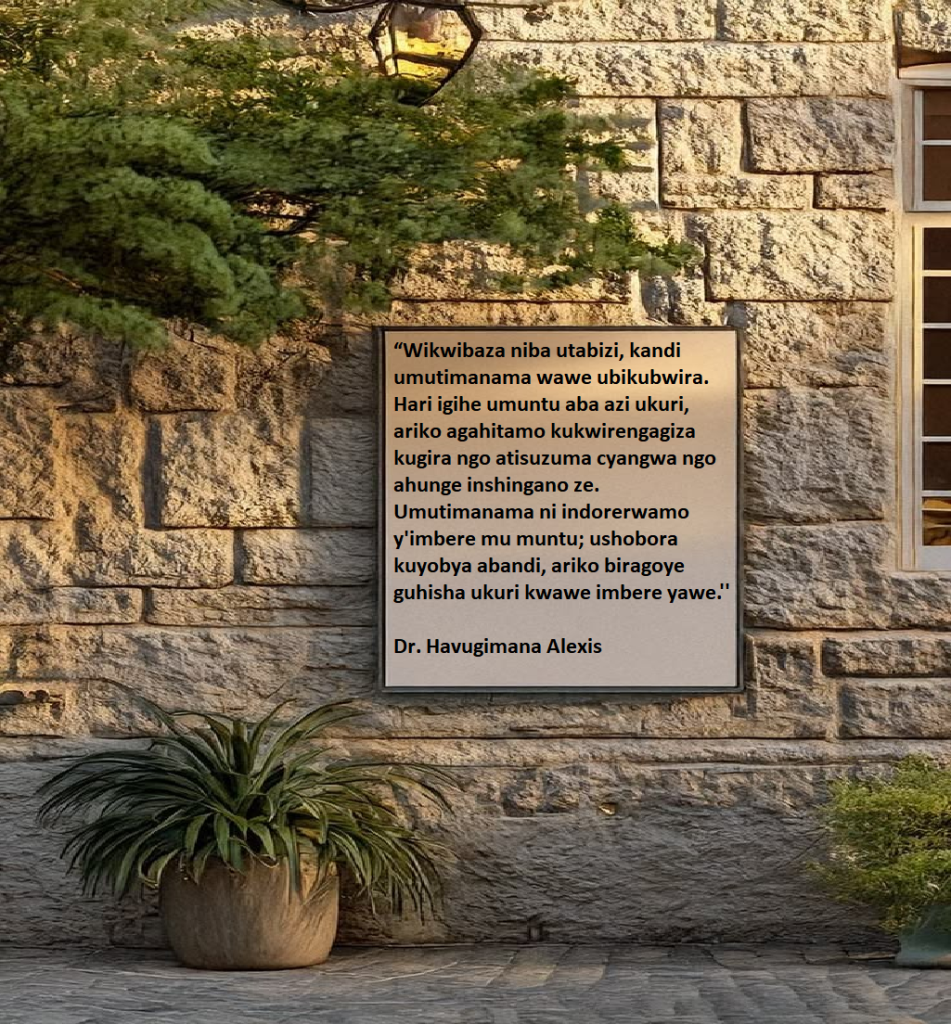
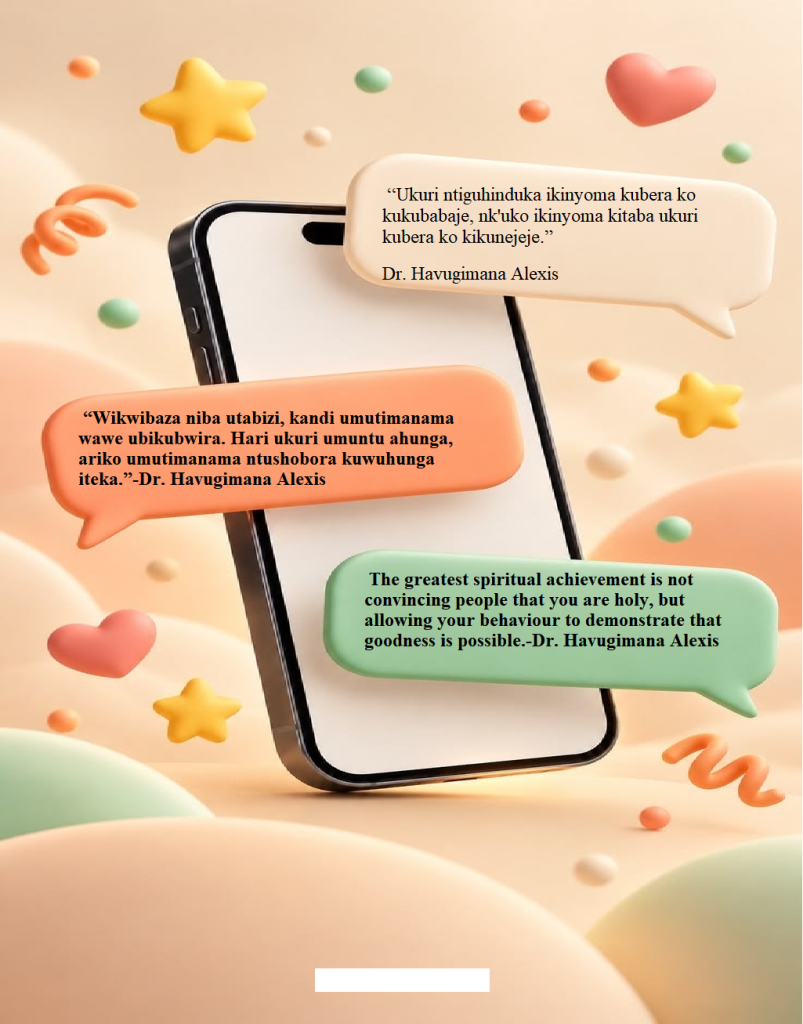
3. The greatest spiritual achievement is not convincing people that you are holy, but allowing your behaviour to demonstrate that goodness is possible.Dr. Havugimana Alexis
4. Holiness begins where selfishness ends and concern for another person’s dignity begins.Dr. Havugimana Alexis
5. Some people build monuments to preserve their names; others build goodness in people’s hearts, and their legacy survives without monuments.Dr. Havugimana Alexis
6. Faith is not simply what you declare when life is comfortable; it is also what sustains your moral direction when life becomes difficult.Dr. Havugimana Alexis
7. A person may know many religious teachings and still struggle to practise one simple lesson: treating another human being with dignity.Dr. Havugimana Alexis
8. The deepest test of faith is not how loudly we speak about God, but how faithfully we practise love, justice and compassion.
9. Prayer may strengthen the heart, but responsibility determines how that strengthened heart treats humanity.Dr. Havugimana Alexis
10. Spiritual maturity begins when a person stops using religion to judge others and starts using it to examine their own conduct.Dr. Havugimana Alexis
11. Death may end a person’s physical presence, but it does not automatically end the influence of their actions.Dr. Havugimana Alexis
12. The most valuable inheritance is not always property; sometimes it is the character, wisdom and moral courage transferred from one generation to another.Dr. Havugimana Alexis
13. People eventually forget the number of possessions you accumulated, but they may never forget how you treated them when they needed you.Dr. Havugimana Alexis
14. A meaningful life is not measured only by the years lived, but by the positive difference made during those years.Dr. Havugimana Alexis
15. Some names disappear from public history, yet the kindness associated with those names continues to live in human memories.Dr. Havugimana Alexis
16. The greatest contradiction is to celebrate goodness publicly while practising injustice privately.Dr. Havugimana Alexis
17. You cannot sincerely honour the lives of compassionate people while deliberately ignoring the suffering of those around you.Dr. Havugimana Alexis
18. Integrity is the ability to remain morally consistent even when nobody is present to evaluate your behaviour.Dr. Havugimana Alexis
19. The world does not lack people who know what is right; it often lacks people willing to sacrifice personal interests to do what is right.Dr. Havugimana Alexis
20. A person’s moral character becomes visible not when they are surrounded by powerful people, but when they encounter those who have nothing to offer them.Dr. Havugimana Alexis
21. A society becomes morally richer when its people value compassion more than competition and justice more than personal advantage.Dr. Havugimana Alexis
22. The person who gives hope to another human being may accomplish something that money cannot measure.Dr. Havugimana Alexis
23. True greatness is not the power to command others, but the ability to use one’s influence to protect their dignity.Dr. Havugimana Alexis
24. Never underestimate an ordinary act of kindness; some of humanity’s greatest transformations begin with actions that appear insignificant.Dr. Havugimana Alexis
25. A world that celebrates heroes but neglects vulnerable people has not fully understood the meaning of human greatness.Dr. Havugimana Alexis
26. On All Saints’ Day, we remember those who lived exemplary lives; the deeper question is whether our own lives are becoming examples worth remembering.Dr. Havugimana Alexis
27. Do not spend your entire life searching for extraordinary people while refusing to practise ordinary goodness.Dr. Havugimana Alexis
28. The best way to honour a legacy of love is to prevent hatred from becoming your own inheritance.Dr. Havugimana Alexis
29. You do not need to wait until history recognises you before beginning to do something meaningful for humanity.Dr. Havugimana Alexis
30. The saints remind us of what human life can become when faith, humility, courage and love are translated into action. Their greatest lesson is not simply to admire them, but to become better human beings.Dr. Havugimana Alexis
“Do not only admire the lives of those who became examples of goodness. Examine your own life and ask whether your actions are making the world a better place.”
Dr. Havugimana Alexis
12. References
The following references provide the historical, theological, philosophical and sociological foundations of the article.
1. Aristotle. (2009). The Nicomachean Ethics (W. D. Ross, Trans.). Oxford University Press.
2. Associated Press. (2026, November 1). Filipino families keep their loved ones close on All Saints’ Day. Associated Press. Read newspaper report.
3. Bandura, A. (1977). Social learning theory. Prentice Hall.
4. Catechism of the Catholic Church. (1992). The communion of saints (Paragraphs 946–948). Vatican. Read the Catechism.
5. Catholic Encyclopedia. (n.d.). All Saints’ Day. New Advent. Historical reference.
6. Durkheim, É. (1995). The elementary forms of religious life (K. E. Fields, Trans.). Free Press. (Original work published 1912).
7. Francis. (2018). Gaudete et Exsultate: On the call to holiness in today’s world. Vatican.
8. Halbwachs, M. (1992). On collective memory (L. A. Coser, Trans.). University of Chicago Press.
9. Kant, I. (2012). Groundwork of the metaphysics of morals (M. Gregor & J. Timmermann, Eds. and Trans.). Cambridge University Press.
10. Le Monde. (2025, November 1). Toussaint: que célèbrent les catholiques le 1er novembre? Le Monde. Read newspaper article.
11. Le Monde. (2026, November 1). Toussaint: que célèbrent les catholiques le 1er novembre? Le Monde. Read 2026 report.
12. United Nations. (2015). Transforming our world: The 2030 Agenda for Sustainable Development. United Nations.
13. Vatican News. (n.d.). Solemnity of All Saints. Vatican News. Read historical and religious background.
14. Vatican News. (2026, November 1). Pope at Angelus: May we never grow weary of fostering peace in all situations. Vatican News. Read the 2026 report.
15. English Heritage. (n.d.). A brief history of Halloween, All Saints’ Day and All Souls’ Day. Read historical discussion.
16. Encyclopedia.com. (n.d.). All Saints, Solemnity of. Read historical entry.