October 1, 1990: The Day Rwanda’s History Changed
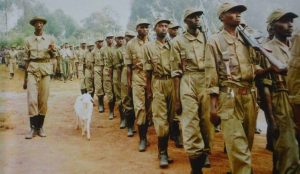
October 1, 1990, marked the beginning of another decisive chapter in Rwanda’s history. It is widely remembered as the beginning of the armed struggle of the RPF-Inkotanyi, when its military wing, the Rwanda Patriotic Army (RPA), entered Rwanda from Uganda. The initial incursion took place mainly around the Kagitumba border area in northeastern Rwanda.
Major General Gisa Fred Rwigema was one of the commanders who brought the forces together and led the struggle during its early days.
Why Was October 1 Significant?
A Point of No Return — Under the Leadership of General Fred Gisa Rwigema
Major General Fred Gisa Rwigema
To understand what happened on October 1, 1990, we need to look back. Following the events of 1959, many Rwandans, particularly Tutsi, went into exile in different countries of the region. In the years that followed, the question of the return of refugees became one of the major political issues facing Rwanda and the wider region.
In 1979, the Rwandese Alliance for National Unity (RANU) was established among Rwandan refugees. It later became the Rwandese Patriotic Front (RPF) in 1987. In the years that followed, debates over the return of refugees and the way Rwanda was governed continued, eventually leading the RPF to adopt a military option.
Kagitumba:
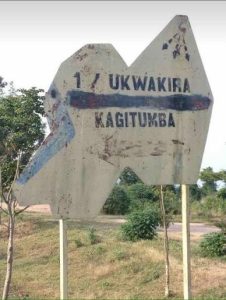 Where the Fighting Began
On the morning of October 1, 1990, RPA forces crossed the Ugandan border and entered Rwandan territory. Accounts from the RDF indicate that during the initial phase of the war, RPA forces reached areas including Kagitumba, Nyagatare and Gabiro, and captured the Gabiro military camp.
On October 2, Major General Fred Gisa Rwigema fell in battle.
However, the fighting was not easy. Following the death of Major General Fred Gisa Rwigema, who had commanded the RPA forces at the beginning of the campaign, the Rwandan government forces (FAR) launched operations to retake areas that had been captured. The RPA suffered significant losses and subsequently changed its methods of operation.
The conflict then developed into a prolonged war involving military offensives, retreats and regrouping, political negotiations and ceasefire agreements. In 1992, substantive peace negotiations began, eventually leading to the 1993 Arusha Peace Accords.
October 1 and the Refugee Question
One of the principal issues cited by the RPF was the situation of Rwandans who had spent many years in exile. Human Rights Watch has described the refugee question as an important factor in explaining the beginning of the conflict, while the RPF also stated that it sought political change, democracy, and solutions to problems of discrimination and persecution.
October 1, 1990, was therefore not simply a day of war; it was the beginning of a chain of political, military and social events that would profoundly change Rwanda’s history.
What Was Reported in the Newspapers at the Time?
1. The Christian Science Monitor — October 1, 1990
The newspaper published a report describing the outbreak of renewed fighting in Rwanda on October 1, linking the conflict to the refugee question, land and long-standing tensions in Rwanda.
2. New Vision — Uganda
The Ugandan newspaper closely followed developments along the Uganda-Rwanda border. Journalist Justus Muhanguzi later recalled seeing numerous military trucks passing through Mbarara on October 1, heading toward the Kabale-Rwanda border.
3. The Guardian — October 4, 1990
A few days later, The Guardian reported that Rwanda had requested military assistance from Belgium as fighters had entered the country from Uganda and fighting had moved closer to Kigali.
4. The Washington Post — October 4, 1990
The newspaper reported that Rwanda had requested military assistance from Belgium following the crossing of fighters from Uganda. It also reported the imposition of a curfew in Rwanda.
5. The Washington Post — October 5, 1990
The newspaper reported that fighting had reached Kigali, while French and Belgian soldiers had begun arriving in Rwanda.
6. Los Angeles Times — October 7, 1990
The Los Angeles Times reported that fighting was continuing across the country, that many foreigners had begun leaving Kigali, and that Belgian and French troops were protecting strategic locations, including embassies and the airport.
A Turning Point in Rwanda’s History
The struggle that began in 1990 continued for nearly four years, combining armed conflict with peace negotiations. In 1994, following the downing of the plane carrying Rwandan President Juvénal Habyarimana and Burundian President Cyprien Ntaryamira on April 6, the Genocide against the Tutsi began, and the war resumed.
The genocide had been preceded by a period of preparation, as documented by subsequent evidence and investigations.
On July 4, 1994, RPA forces captured Kigali, bringing the existing government to an end and stopping the genocide against the Tutsi in areas under their control.
Major General Paul Kagame returned quickly to take command of the forces.
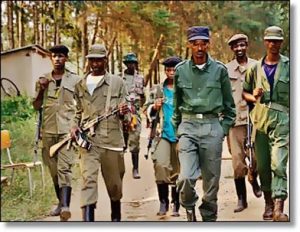
They tightened their belts and continued until they obtained weapons with which to fight.
Major General Paul Kagame was known by the nickname “Afande Peace.”
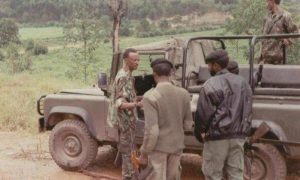
Afande Peace had long understood how people perceive victory. He was highly familiar with the strategies of warfare.
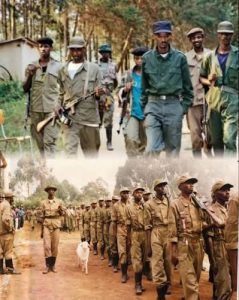
A few days after the war began, following the death of Major General Fred Rwigema, Major General Paul Kagame took command of the struggle.
Radio Muhabura and Radio Kigezi were used.
The RPA forces had been waiting for days for authorization before launching the armed struggle for the liberation of Rwanda.
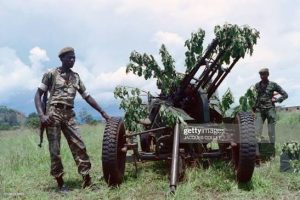
October 1 had been eagerly anticipated by many young men and women of the Inkotanyi, who had come to believe that the path of negotiations was no longer possible and that only the path of armed struggle remained.
In the history of the RPA and Rwanda more broadly, October 1 did not have a particular significance before 1990, although the RPF-Inkotanyi and its military forces did not choose the date randomly.
In the book A Thousand Hills: Rwanda’s Rebirth and the Man Who Dreamed It, journalist Stephen Kinzer explains that the selection of the date had particular significance at the time.
From Saturday, September 29, through Sunday, September 30, 1990, an international conference concerning children’s issues was being held at the United Nations headquarters in New York, United States.
Among the 71 heads of state and government who attended were President Juvénal Habyarimana and Ugandan President Yoweri Museveni. According to Kinzer, the RPF knew that both presidents would still be in the United States on Monday, October 1, 1990.
Kinzer argues that, from Rwanda’s side, it would have been more difficult to organize an effective military response if the president had been inside the country.
Many of the RPA soldiers who launched the struggle had previously served in the Ugandan army and were led by Major General Gisa Fred Rwigema. They were not stationed together; they were deployed in different parts of Uganda. For the operation to succeed, they needed to assemble in one place.
Rwigema, who was Deputy Chief of Defence Forces of Uganda, would have had difficulty moving soldiers from one position to another without attracting the attention of Museveni while the Ugandan president was outside the country.
Kinzer also argues that preparations were facilitated by the fact that October 9 is Uganda’s Independence Day. This meant that soldiers could be moved from certain military positions ahead of time to prepare for independence celebrations and parades.
During this period, RPA commanders were able to move forces of Rwandan origin and assemble them without attracting the attention of other Ugandan military commanders, since the movements could be presented as preparations for Independence Day.
Kinzer states that General Fred Rwigema informed Museveni about the movement of the troops. Since Museveni was his superior and was in New York, other military officers would have been unlikely to question why Rwigema was assembling approximately 2,000 soldiers of Rwandan origin in one location. Rwigema ordered them to move toward areas close to the Rwandan border in preparation for the struggle.
Beginning on September 30, trucks carrying soldiers began moving into the Ankole region of southern Uganda, particularly areas close to the Rwandan border.
The soldiers carried numerous weapons, including weapons they had reportedly taken from Ugandan military arsenals.
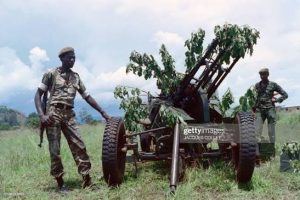
At approximately 10:00 a.m. on October 1, after everything had been put into position, the order was given to cross the Kagitumba border. For the first time, they set foot on the Rwandan soil they had heard about in stories for years.
Within minutes, they had taken control of the area, which was defended by only a small number of government soldiers.
This date became the trigger for a war that lasted four years and ended with the defeat of the government responsible for the genocide and the capture of Kigali on July 4, 1994, marking the beginning of a new chapter in Rwanda’s reconstruction.
What Did the White Sheep in the Photograph Represent? Why Did They Take It With Them Everywhere?
Why Do We Remember October 1?
This day should be remembered as a day to study history, understand the reasons that led the country into war, understand the consequences of division and exile, and reflect on the weight of political choices and their effects on society.
History does not belong only to the victors or only to the defeated. It belongs to the country and its people. When studied carefully, history helps us understand where we came from, why events happened, and what lessons can be drawn from them so that peace, unity and human dignity can be respected more deeply.
October 1, 1990, therefore holds a special place in Rwanda’s history: it marked the beginning of the RPF/RPA armed struggle, which continued until 1994, after the country had passed through war and the Genocide against the Tutsi.
Some people living in Rwanda at the time heard the sounds of war. Some refugees watched events unfold in the country of their parents and ancestors. Some soldiers were on the battlefield, while others remained with their families. Others were far from Rwanda but followed the news closely.
Thirty-six years later, the most important question is not simply:
“Where were you on October 1, 1990?”
It is also to ask:
“What can we learn from history so that what wounded Rwandans will never happen again?”
When history is studied properly, it is not merely about remembering what happened; it becomes a lesson for building the future.
When We Look Back
Today, when we speak about October 1, 1990, we are not talking only about the day forces crossed the border.
We are talking about the beginning of a journey that transformed Rwanda’s history:
- The refugee question became a political and security issue.
- War began.
- The government expanded its military and security measures.
- Multiparty politics intensified.
- Peace negotiations began.
- A process leading toward Arusha was established.
- Eventually, Rwanda’s history reached the major events of 1994.
That is why October 1, 1990, deserves to be studied, documented and discussed through historical evidence and records, rather than viewed from only one perspective.
Remembering History Means Knowing Where We Came From
Rwanda’s history was not built in a single day. Yet some dates become like doors that open a new chapter in a nation’s history.
“History is not merely a story to be told; it is a mirror showing us where we came from, teaching us what we can correct, and reminding us that peace is not built by forgetting the past, but by understanding it and learning from it.”
— Dr. Havugimana Alexis
Read UTABA AMATEKA NTABONA ITAKA
The book UTABA AMATEKA NTABONA ITAKA is available in print on Amazon through the link provided by the author.
It is also available in electronic/soft-copy format through Amazon.
Written by Mwalimu Hakizimana Maurice, UTABA AMATEKA NTABONA ITAKA (Editions Scribes), from which this article was developed.